
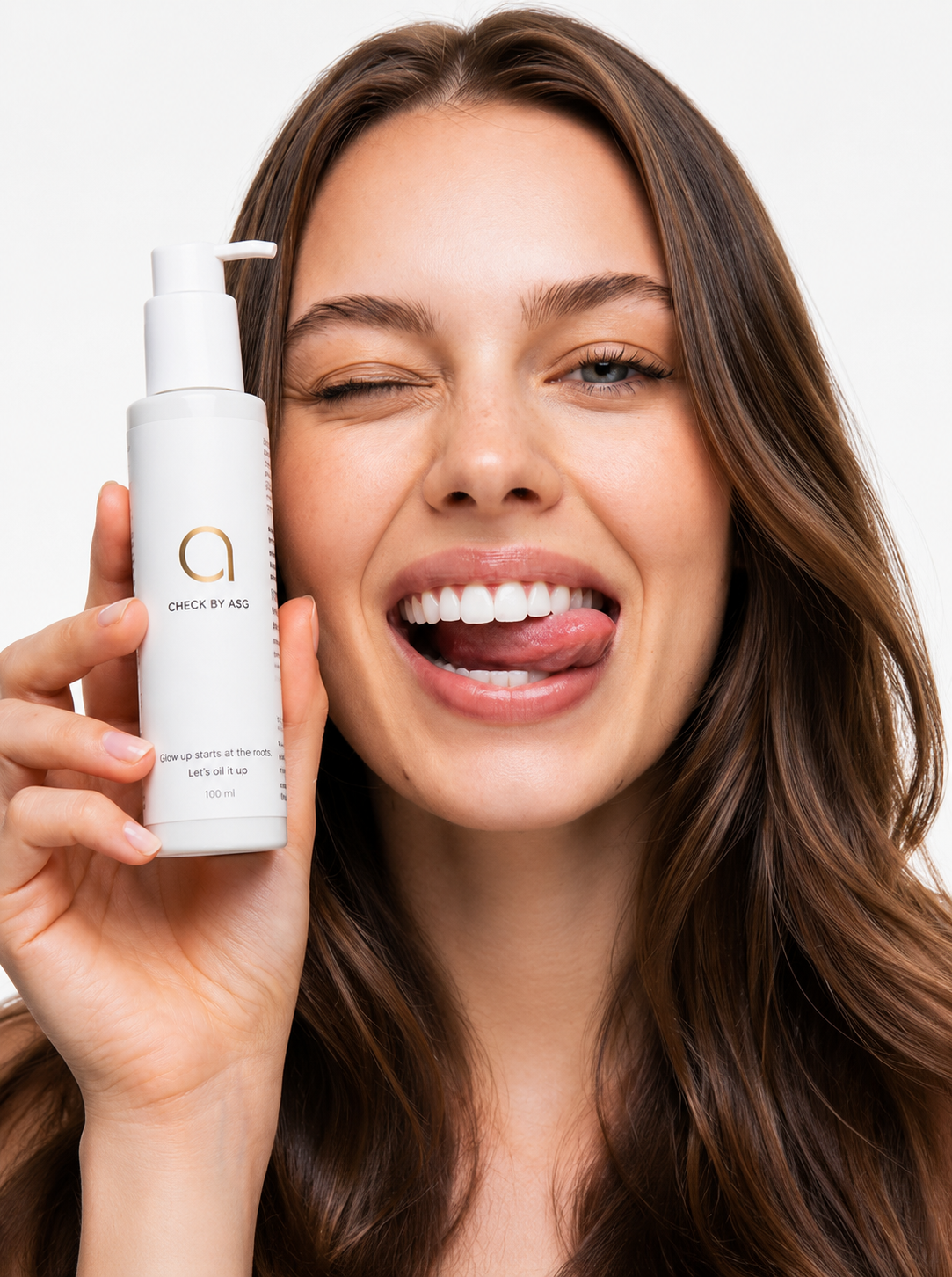
A non greasy hair oil is one that your hair absorbs rather than wears. For dry, frizzy hair the problem has never been oil itself; it has been the amount, where it went, and what was in it. Two pumps on the lengths, worked in with warm palms, is invisible within ten minutes. Half a bottle poured on the crown is a bad day at the office.
Frizz is hair that is reaching for moisture it cannot hold. The cuticle is lifted, humidity gets in, the strand swells unevenly, and every strand goes its own way. A thin film of the right oil slows that exchange down. That is the entire mechanism, and it works whether you are in a Pune cubicle or a Mumbai local.
If you are new to oiling, start with how to apply hair oil correctly. This post builds on that method.
This post is the routine we use ourselves on weekday mornings: how much, where, for how long, and which ingredients make the difference between oil that disappears and oil that announces itself.
Why dry hair gets greasy when you oil it
It sounds like a contradiction. Dry hair should drink oil up. In practice four things go wrong.
The oil goes on the roots. Dryness in most Indian hair lives in the lengths and ends, especially past the ears, where the hair is oldest and has seen the most heat, sun, and hard water. The scalp near the roots is often perfectly well oiled by its own sebum. Pour oil there and you have added grease where there was none and missed the part that needed it.
The amount is wrong. The old method, a palmful at a time, was designed for a Sunday afternoon followed by a long wash. It was never meant for a Tuesday.
The oil is the wrong kind. Mineral oil and silicones, which are in most mass-market hair oils and serums, do not absorb. They sit on the surface as a film. They give instant shine, and that is exactly why they feel greasy by noon and build up over weeks.
And it goes on at the wrong time. Oil on soaking wet hair slides off. Oil on bone-dry, frizzing hair in a humid room has already lost the race. Slightly damp or fully dry hair in a cool room is the window.
What makes a hair oil non-greasy
Partly it is the fatty acids. Oils rich in shorter and medium chains, and lighter emollients like olive, spread thinner and absorb faster than very heavy oils like castor used alone. Partly it is what has been left out: no mineral oil, no silicones, no waxes. And partly it is the herbs. Reetha and shikakai in a blend behave a little like a built-in cleanser; they help the oil rinse out in one wash and leave nothing behind to feel coated.
Cold infusion matters too. A heat-processed oil often has a thicker, more cooked texture. A cold-infused one stays closer to the base oil’s natural weight.
The last factor is the bottle. A pump dispenses the same small amount each time. A cap bottle pours. Most people who think they cannot wear oil to work have simply never been able to measure it.
The weekday morning routine
This takes about four minutes and assumes you wash your hair in the evening or every second day.
- Half a pump. Press once, then rub your palms together until they are barely shiny. For hair below the shoulders, one full pump.
- Ends first. Gather the bottom third of your hair and press it between your palms. Do not rake with fingers; pressing distributes the oil without disturbing the cuticle.
- Mid-lengths second. Whatever is left on your palms goes on the section between your ears and the ends.
- Skip the scalp. On a work morning, the scalp does not need it. Scalp oiling is for the pre-wash session.
- Comb once with a wide-tooth comb, then leave it. No wash, no rinse. This is a leave-in amount and it will not look like oil.
By the time you have had your chai it has settled. Hair looks like hair, only calmer.
The pre-wash version is different and fuller: two to four pumps, scalp massaged in slow circles for two to three minutes, lengths after, 30 minutes to overnight, then shampoo. We wrote that up as the three-minute scalp method, and that is the one that does the root and density work. The morning routine is only for frizz.
Which version for which day
| Situation | How much | Where | Wash? |
|---|---|---|---|
| Office, 8am, hair washed last night | Half a pump | Ends and mid-lengths | No |
| Gym after work | None in the morning; 2 pumps on scalp after the gym, wash in 30 to 60 min | Scalp, then lengths | Yes |
| Monsoon morning, frizz at the hairline | Half a pump, plus a drop pressed on the baby hairs | Ends, hairline | No |
| Wedding or function, hair open | One pump on dry hair, 2 hours before, then blot ends with tissue | Lengths only | No |
| Saturday or Sunday ritual | 3 to 4 pumps | Scalp first, then lengths | Yes, after 30 min or next morning |
The 60-day rule. One 100ml bottle lasts about four weeks, and with half-pump mornings it stretches further. Most people see the difference at week eight, when the ends stop frizzing before the oil even goes on. That is why we sell it as a pair: 2 × 100ml for ₹1,999. Two bottles is one full cycle.
The night-before option
If mornings are chaos, move the work to the night before. Two pumps on the lengths after your evening wash, while the hair is still slightly damp, then a loose plait. By morning the hair has drunk what it needs and you brush and go. This is lighter than a full overnight scalp oiling and suits people with oily scalps and dry ends, which is most people in their twenties and thirties.
A full overnight session, scalp included, is good once a week if your scalp is on the dry side and your pillowcase can take it. We cover who it suits and who should skip it in our guide to overnight hair oiling.
The herbs that keep the oil light
Lightness is built into a blend by what is in it, not just what is left out. Olive is a light emollient that spreads thin and helps lock moisture in the lengths, which is the main frizz job. Aloe vera at 2% adds water-based hydration so the hair is not relying on oil alone. Shikakai and heena condition and leave a soft, glossy finish rather than a slick one. Reetha keeps the whole thing washable. Castor, which seals the ends, is there in a proportion small enough to help without the tackiness it has on its own.
The scalp herbs are still present for the pre-wash days: amla, bhringraj, jatamansi, and neeli indigo at 5% each, plus brahmi, kalonji, karanja, neem, nimbu, onion, and manjistha. We list all 17 herbs and their percentages so you can see for yourself that there is no mineral oil, silicone, or synthetic fragrance anywhere in the bottle.
Mistakes that make any oil greasy
Applying to wet hair straight out of the shower. Water and oil do not mix; the oil beads and slides to the ends in a clump. Towel-dry first.
Adding more because the first application did not shine. Oil that has been absorbed does not shine. That is the point. Shine comes from a smooth cuticle, which takes a few weeks of consistent use, not from more oil today.
Raking with fingers from root to tip. This drags oil onto the scalp and lifts the cuticle. Press and smooth instead.
Using a heavy cap-bottle oil and estimating the amount. You will overpour every time. Decant into a pump bottle if the oil you like does not come in one.
Frequently asked questions
Can I leave hair oil in all day and go to work?
A small amount on the lengths, yes. Half a pump rubbed between your palms and smoothed over the ends of dry hair acts like a frizz serum and is invisible by the time you reach the office. A full scalp application is a different thing; that needs a wash within a few hours or overnight.
Why does my hair look greasy even with a little oil?
Usually because the oil went on the roots when the dryness was in the lengths, or because the oil contains mineral oil or silicones that coat rather than absorb. Apply to the mid-lengths and ends first, use less than you think, and check the label for paraffinum liquidum or dimethicone.
Is coconut oil non-greasy?
Coconut oil penetrates the hair shaft well, which is a point in its favour, but it is solid below about 24°C and can sit heavy on fine hair. In a Delhi winter it needs warming before it spreads. A blend with lighter oils like olive tends to feel less greasy at the same dose.
Does hair oil help with frizz in the monsoon?
Yes, used lightly. Frizz is hair absorbing moisture from humid air and swelling unevenly. A thin film of oil on the lengths slows that absorption. Half a pump on the ends on a Mumbai August morning does more than any amount of hairspray.
How much oil should I use for shoulder-length hair?
For a pre-wash scalp and length application, two to four pumps. For a daytime frizz touch on the ends, half a pump. If your palms are shiny after you have finished, you have used too much; wipe them on the ends rather than adding more.
Dry, frizzy hair does not need less oil. It needs oil that goes where the dryness is, in an amount the hair can take, from a bottle that does not let you overpour. Get those three right and the question of greasiness mostly disappears. If you want to run the routine above for a full cycle, two bottles for ₹1,999 will see you through the eight weeks.
All 17 herbs, in one bottle
Bhringraj, amla, brahmi and 14 more cold-infused herbs — our 17-Herb Ayurvedic Hair Oil is made for hair fall, thinning and slow growth.