
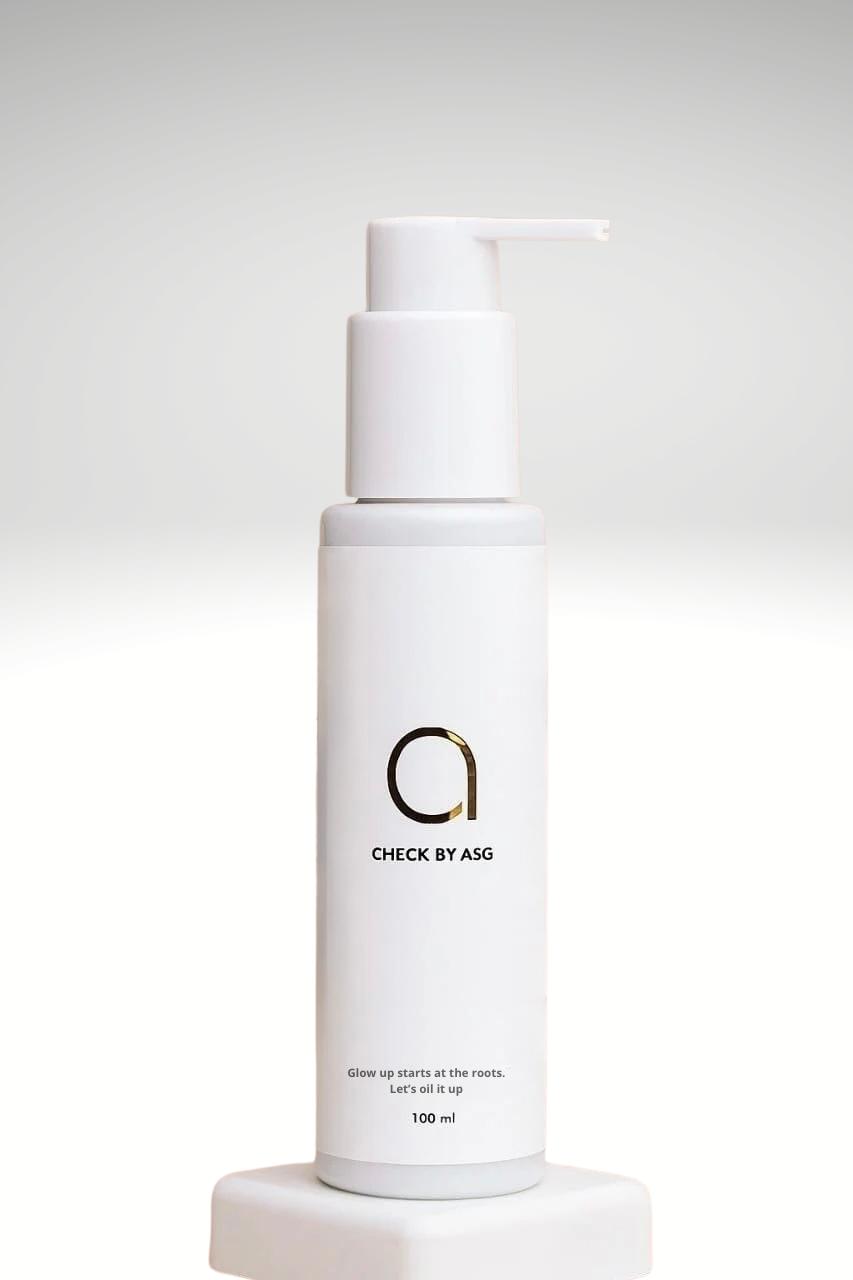
To patch test hair oil, put a coin-sized drop on the inside of your forearm or behind your ear, leave it uncovered for 24 to 48 hours, and watch for redness, itch, bumps or a warm, tight feeling. If nothing happens, apply a small amount to one patch of scalp and wait another day. Only then oil the whole head. The entire process costs you two days and about four drops of oil, and it is the single most reliable way to avoid a sore scalp from a new product.
“But it is natural” is the sentence we hear most often, and it is exactly why this post exists. Neem, henna, amla, citrus, sesame and many other herbs contain active compounds. For most people they are gentle. For a few, they are the thing their skin reacts to. Natural does not mean inert. It means the chemistry was made by a plant instead of a lab.
If you are new to oiling, start with how to apply hair oil correctly. This post builds on that method.
Here is how to do the test properly, what a reaction looks like, and what to do if you get one.
Why natural oils still need a patch test
Allergic contact dermatitis is the skin reacting to a specific substance it has decided is a threat. The substance can be synthetic, like a fragrance molecule, or botanical, like the compounds in a herb. Skin does not check the label.
A few examples from the hair oil world. Lawsone, the pigment in henna, is low-risk on its own, but some people react to it, and “black henna” products mixed with PPD cause serious reactions. Citrus oils and extracts can make skin more sensitive to sunlight. Neem is strong and can irritate when used neat. Sesame and nut oils are a problem for people with those food allergies. Fragrance, synthetic or essential-oil based, is the most common irritant in hair products of all.
A herbal blend is a mix of a dozen or more of these. Most people will be fine. The patch test is how you find out whether you are one of them before the whole scalp is involved. Our post on ayurvedic hair oil side effects covers what real reactions look like versus the myths.
The patch test, step by step
- Pick a spot. The inside of the forearm is the standard, because the skin is thin and easy to watch. Behind the ear is closer to the scalp’s own skin and is a good second choice.
- Wash and dry the spot. No moisturiser, no other product.
- Apply a coin-sized amount of the oil. Rub it in lightly. Do not cover it with a plaster, because occlusion can cause irritation on its own and confuse the result.
- Leave it alone for 24 hours. Avoid washing that patch if you can. If you shower, let the water run over it without soap.
- Check at 24 hours. Look for redness, raised bumps, itch, a burning or tight sensation, or dry flaking. Compare with the same spot on the other arm.
- Check again at 48 hours. Some reactions are slow, especially allergic ones. If the skin is still clear and comfortable at 48 hours, the forearm test has passed.
- Do a scalp spot test. Apply a small amount to one area of scalp, about the size of a two-rupee coin, behind one ear or at the nape. Massage it in, leave it for 30 minutes, wash. Wait 24 hours.
- If the scalp spot is clear, oil the whole head.
The scalp step is the one people skip. Scalp skin is thicker and oilier than forearm skin, has more follicles, and behaves differently. A forearm that is fine does not fully rule out a scalp that itches. The spot test closes that gap.
What a reaction looks like, and what it does not
A true reaction is usually obvious. Red skin that is clearly pinker than the surrounding area. Small raised bumps. Itch that makes you want to scratch. A feeling of warmth or tightness. In a stronger reaction, small blisters or weeping.
What is not a reaction: a faint shine from the oil, slightly softer skin, or a mild warmth in the first two minutes from rubbing. A faint yellow or greenish tint from the herbs is not a reaction either. Our oil contains neeli indigo and heena, and on very pale skin a faint tint on the test patch is possible and harmless.
If you are unsure, take a photo at hour 0, hour 24 and hour 48 in the same light. Skin that looks the same in all three photos has passed.
The 60-day rule. One 100ml bottle lasts about four weeks. Most people see the difference at week eight. Two days of patch testing at the start is a small price for eight comfortable weeks. That is why we sell it as a pair: 2 × 100ml for ₹1,999. Two bottles is one full cycle.
What to do if you react
Wash the area with a mild soap and cool water. Do not scrub. Do not apply the oil again. A plain, fragrance-free moisturiser on the patch helps the skin settle. If the reaction is itchy and spreading, a pharmacist can suggest an over-the-counter cream, and a doctor should see anything with blistering, swelling or a reaction that lasts more than two or three days.
Keep the bottle and take it with you. A dermatologist can read the ingredient list and may be able to tell you which herb to avoid in future. That knowledge is worth more than the price of the oil, because it protects you from every other product that contains the same thing.
A reaction to one blend does not mean you cannot oil your hair. It means one ingredient in that blend is not for you. Plain, single-ingredient oils are the way to narrow it down, one at a time, each with its own patch test.
What “dermatologically tested” does and does not cover
Our 17-Herb Hair Oil is dermatologically tested. That phrase means the finished product was applied to human volunteers under a dermatologist’s supervision to check for irritation, and it passed. It is a useful signal. It is not a promise that no individual will ever react, because allergy is personal and no panel of volunteers can stand in for every scalp in India.
We wrote a plain explanation of what the phrase legally and practically means in dermatologically tested hair oil, explained. The short version: it lowers the odds of a problem. Your patch test is what lowers them for you specifically.
It is also why we print the full herb list. Bhringraj, amla, jatamansi and neeli indigo at 5 per cent each. Aloe vera at 2 per cent. Then brahmi, kalonji, karanja, neem, nimbu, onion, reetha, shikakai, heena, olive, manjistha and castor. We list all 17 herbs and their percentages so that if you already know you react to something, you can check before you buy rather than after. No mineral oil, no silicones, and no synthetic fragrance, which removes the most common irritant from the equation before the test even starts.
Patch testing for children, sensitive scalps and after a break
Children’s skin is thinner and reacts more readily. For a child, do the forearm test with half the amount, and extend the wait to a full 48 hours before the scalp step. Our post on oiling for kids and teenagers has the full routine.
If you have eczema, psoriasis, or a history of reacting to cosmetics, do the test on a patch of normal skin, never on an active flare, and show the ingredient list to your dermatologist first. People with known nut, seed or latex allergies should read every blend’s list carefully.
And retest after a long gap. If you have not used a product for six months or more, or if you have changed medication, been through pregnancy, or had a significant illness, the skin can behave differently. A quick 24-hour forearm test before restarting is sensible.
One more thing. Patch test each new bottle of a different brand, even if the last one was fine. Two “ayurvedic hair oils” can have almost nothing in common.
Frequently asked questions
How long should I patch test hair oil?
Leave the oil on the inner forearm for 24 hours and check, then check again at 48 hours. Allergic reactions can be slow. Follow with a small scalp spot test for another 24 hours before using the oil on the whole head.
Where is the best place to patch test?
The inside of the forearm is standard because it is easy to watch. Behind the ear is closer to scalp skin. Finish with a coin-sized spot on the scalp itself, because scalp skin behaves differently from arm skin.
Do I need to patch test a natural or ayurvedic hair oil?
Yes. Herbs contain active compounds, and a small number of people react to neem, henna, citrus, sesame and others. Natural means made by a plant, not free of chemistry. The test takes two days and prevents a sore scalp.
What does a positive patch test look like?
Redness clearly pinker than the surrounding skin, raised bumps, itch, burning or tightness, or in stronger cases small blisters. A faint shine or a slight herbal tint on the skin is not a reaction.
Can I patch test on my scalp directly?
Do the forearm test first, because a scalp reaction is harder to see and more uncomfortable. If the forearm is clear at 48 hours, a small scalp spot test is the right final step.
Four drops, two days, one careful look in the mirror. That is the whole patch test, and it is the difference between finding out on your forearm and finding out on your scalp. If you are ready to start the test with our blend, the two-bottle pack is here, and the first pump is the one you test with.
All 17 herbs, in one bottle
Bhringraj, amla, brahmi and 14 more cold-infused herbs — our 17-Herb Ayurvedic Hair Oil is made for hair fall, thinning and slow growth.