
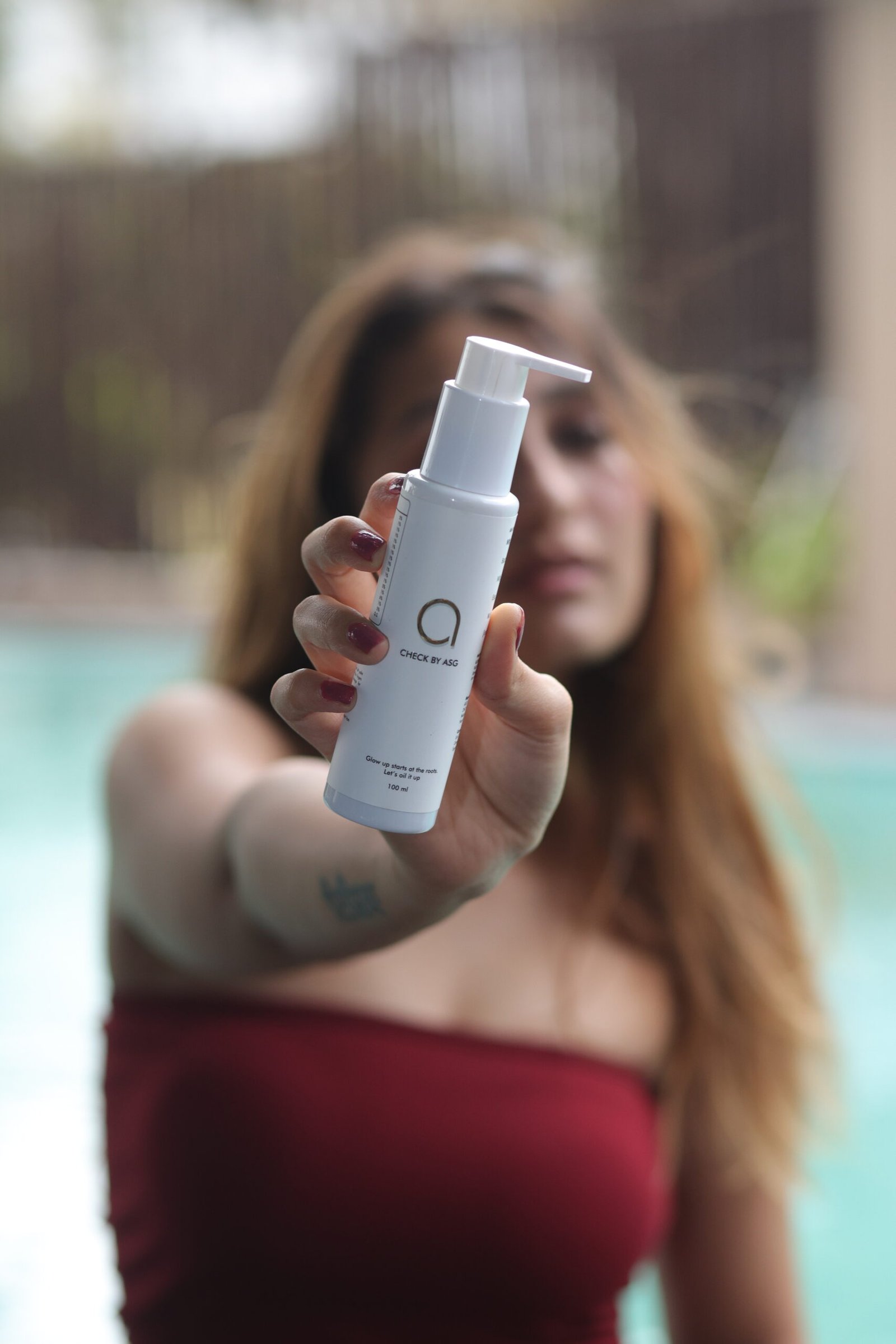
The 60 day hair challenge is simple on paper: oil your scalp two or three times a week for eight and a half weeks, massage for three minutes each time, wash properly, and measure one thing honestly along the way. Sixty days is not a marketing number. It is roughly how long a hair follicle needs to move from the resting phase into new growth, and how long it takes for fewer hairs to be shed before you can see it on the comb.
Most people quit at day 25. The oil is half gone and the mirror looks the same. This guide is built to get you past that point, with a week-by-week table you can print and stick inside the bathroom cabinet.
If you are new to oiling, start with how to apply hair oil correctly. This post builds on that method.
One rule before we start. The challenge measures shedding and scalp health. It does not promise a new hairline. If you are shedding because of a thyroid problem, low iron or a recent illness, oiling will support the scalp, but the blood test is the real fix.
What the 60 days are actually doing
Hair grows in cycles. At any moment, most of your hair is in a growth phase that lasts years, a small share is resting, and a small share is on its way out. When something disturbs the cycle, more hairs than usual move into the shedding phase, and they fall two to three months later. That delay is why a bad fever in July shows up on your pillow in October.
Oiling and massage work on the other side of that delay. A calmer, better-circulated scalp supports the follicles that are deciding, right now, whether to keep growing. The hairs you save in week one do not show up as “less shedding” until week six to eight. So the challenge is really about being patient through a period when nothing visible is happening.
We wrote the full timeline in how long hair oil takes to show results. The short version: week two, the scalp feels different. Week four, the texture changes. Week eight, the comb tells you.
Before day 1: set up the measurement
Pick a Sunday evening. Three things.
First, the comb test. Brush or comb dry hair for one minute from the scalp down, over a white sheet or a bathroom tile, and count the hairs. Write the number down. Do this on the same day each week, before washing, with the same comb. One number a week is enough.
Second, a parting photo. Stand under the same light, part your hair the same way, and take a photo of the scalp from above. Do it on days 1, 30 and 60. Photos lie less than memory.
Third, a one-line note. Itch, flakes, oiliness by evening, how the hair felt on wash day. Keep it to one line, or you will stop by week three.
Then do a patch test on the inner forearm with the oil you plan to use, 24 hours before day 1. Natural oils still contain plant compounds, and a reaction on day 3 would end the challenge before it started.
The 60-day week-by-week plan
| Week | Days | Oil sessions | What to do | What most people notice |
|---|---|---|---|---|
| 1 | 1 to 7 | 2 | Learn the three-minute scalp massage. Leave oil 30 minutes, then wash. Record the comb count on day 7. | Hair feels softer on wash day. Comb count may rise slightly as loose hairs are dislodged. Do not panic. |
| 2 | 8 to 14 | 2 to 3 | Try one overnight session if your scalp is not oily. Note itch and flakes. | Scalp feels less tight. Less itch for many people. |
| 3 | 15 to 21 | 3 | Keep the massage slow. Check your shampoo: if the scalp feels squeaky, switch to a milder one. | Flakes settle. Hair looks a little glossier. The comb count is often still unchanged. |
| 4 | 22 to 28 | 3 | Take the day-30 photo at the end of the week. First bottle finishes around now. Open the second. | The quit point. Texture is better, shedding is not. This is normal. |
| 5 | 29 to 35 | 3 | Nothing new. Same sessions, same count. Add a protein-rich breakfast if yours is mostly carbs. | Comb count begins to drift down for some people. Not all. |
| 6 | 36 to 42 | 3 | Compare the week-6 count with the week-1 count. Keep going regardless. | Many people see a clear drop in shed hairs now. Baby hairs at the hairline for some. |
| 7 | 43 to 49 | 3 | Reduce to 2 sessions if the scalp feels over-oiled. Otherwise hold at 3. | Hair holds a style better. Less on the pillow. |
| 8 | 50 to 56 | 2 to 3 | Take the day-60 photo at the end of this week or on day 60. Line up all three photos. | The comb count and the parting photo are the verdict. |
| Finish | 57 to 60 | 1 to 2 | Decide: continue at 2 a week as maintenance, or stop and watch what happens over the next month. | Most people continue. The scalp has got used to being looked after. |
Each session is the same. Warm two or three pumps in your palms. Apply to the scalp in sections, not the lengths. Massage in slow circles with the pads of your fingers for two to three minutes, moving the skin over the skull rather than rubbing the surface. Leave it 30 minutes to overnight, then wash.
If you want the massage technique in detail, including how much pressure and why slow matters more than hard, our post on scalp massage for hair growth covers the small research that exists.
The 60-day rule. One 100ml bottle lasts about four weeks. Most people see the difference at week eight. The challenge is built around that, and the second bottle is what gets you through week four. That is why we sell it as a pair: 2 × 100ml for ₹1,999. Two bottles is one full cycle.
The herbs that make the 60 days count
You can run this challenge with any oil. We think the herbs change what you get at the end of it.
Our 17-Herb Hair Oil puts bhringraj and amla at 5 per cent each. Bhringraj is the herb traditionally used for density and growth. Amla brings vitamin C to the roots and gives the shine people notice at week three. Jatamansi, also at 5 per cent, calms a stressed scalp, which matters because stress is one of the most common reasons the comb count went up in the first place. Onion adds sulphur for strength. Brahmi supports the follicle and helps with breakage. Manjistha is traditionally used for scalp circulation, which is the same thing the massage is doing with your fingers.
Neem, karanja and nimbu keep the scalp clean and balanced through eight weeks of oiling, so you do not swap hair fall for flakes. Castor seals the ends. Olive keeps the whole thing light enough to wash out. We list all 17 herbs and their percentages on one page. The oil is cold-infused, handmade in small batches, and dermatologically tested, with no mineral oil, silicones or synthetic fragrance.
Why week four is where it falls apart
By the end of week four, three things have happened. The novelty is gone. The first bottle is empty. And the one number you were tracking has not moved.
This is the point we wrote a whole post about, because it is the single most common reason people say their hair oil did not work. The hairs falling in week four were already on their way out in week one, before you started. The oil cannot call them back. What it can do is support the follicles underneath, and those take until week six or eight to show up as fewer hairs on the comb.
So the week-four instruction is deliberately boring. Take the photo. Open the second bottle. Change nothing.
What the challenge cannot do
If your comb count is above a hundred hairs a day and has been for more than three months, or if the shedding started after a fever, surgery, childbirth or a crash diet, you are probably looking at telogen effluvium or a nutritional gap. Oiling supports the scalp while it recovers. A blood test for haemoglobin, ferritin, thyroid and vitamin D is the thing that tells you why, and a doctor is the person to read it.
If the thinning is in a pattern, at the temples and crown for men or a widening parting for women, that is often hereditary. A healthy scalp helps, but oil alone will not reverse it. A dermatologist can talk you through what does.
And if the scalp is sore or crusted, stop the challenge and get it looked at.
Frequently asked questions
Can I see results from hair oil in 60 days?
Most people notice scalp comfort and texture within three weeks, and a drop in shedding between weeks six and eight. New density takes longer, because new hairs grow about a centimetre a month. Sixty days is enough to know whether the routine is working for you.
How many times a week should I oil during the challenge?
Two sessions in week one, three from week two or three onwards if your scalp is comfortable. Oily scalps may do better at two throughout. Daily oiling does not speed anything up.
Should I leave the oil overnight?
Only if your scalp is dry or normal and you wash in the morning. Oily or dandruff-prone scalps should keep it to 30 to 45 minutes before a wash. One overnight session a week is a reasonable middle.
What if my hair fall gets worse in the first two weeks?
A small rise in the comb count in weeks one and two is common. Massage dislodges hairs that were already loose. If the rise is large, or comes with itch, redness or bumps, stop and do a patch test, and see a doctor if it continues.
Can I do the 60-day challenge with coconut oil?
Yes. The massage and the consistency are the main thing. A herbal blend adds scalp-calming and root-supporting herbs on top, which is why we made one, but the habit matters more than the brand.
What do I do after day 60?
Most people drop to two sessions a week as maintenance. If you stop entirely, keep taking the weekly comb count for another month. That tells you more about what the oil was doing than anything else.
Sixty days is nine Sundays. A steel katori of warm oil, three minutes of slow circles, and one honest number a week. That is the whole challenge. If you want to start it with both bottles on the shelf, the two-bottle pack is one full cycle.
All 17 herbs, in one bottle
Bhringraj, amla, brahmi and 14 more cold-infused herbs — our 17-Herb Ayurvedic Hair Oil is made for hair fall, thinning and slow growth.