
PCOS hair loss is one of the few kinds of hair fall where we will say, right at the top, that oil is not the answer. It is part of the answer. Polycystic ovary syndrome raises androgen levels, and androgens shrink hair follicles on the scalp in a specific pattern: a widening parting and a thinning crown, usually with the front hairline intact. No herb reverses the hormone. A doctor can help you manage it, and that is where this starts.
What oiling can do is look after the scalp while the medical plan does its slow work, protect the hair you still have from breaking, and give you a small, steady habit in a condition that otherwise feels out of your hands. That is a real contribution. It is also a limited one, and we would rather be clear about that than sell you a bottle on a promise.
For the wider picture, our guide to the most common hair fall reasons explains how to tell one cause from another.
Here is what PCOS does to hair, what to ask a doctor for, what genuinely helps, what does not, and how to oil through it without wasting your time.
What PCOS does to hair
PCOS is a hormonal condition, and it is common. Estimates in Indian studies vary widely depending on the criteria used, but it is one of the most frequent reasons a young woman in Delhi, Pune or Hyderabad sits in front of a gynaecologist. The three features doctors look for are irregular or absent periods, signs of excess androgen (acne, facial or body hair, scalp thinning, or raised levels on a blood test), and polycystic ovaries on ultrasound. Two of the three is usually enough for a diagnosis.
The hair part works like this. Androgens, including testosterone and the more potent DHT it converts to, act on hair follicles. On the face and body they make hair grow thicker. On the scalp, in follicles that are genetically sensitive to them, they do the opposite: each growth cycle produces a slightly finer, shorter hair than the last. Dermatologists call this miniaturisation, and the pattern it produces, a widening centre parting and a see-through crown, is called female pattern hair fall.
Insulin resistance, which travels with PCOS in many women, makes this worse by pushing androgen levels higher. So does the stress of living with the condition, which can add a second, diffuse kind of shedding on top of the pattern thinning. If you want to place PCOS among the other causes, our overview of the nine hair fall reasons dermatologists see most in your 20s and 30s is a good map.
What to ask a doctor for
If your parting is widening, your periods are irregular, and you have acne or facial hair that is new, see a gynaecologist or an endocrinologist before you buy anything. Ask for a blood panel that includes total and free testosterone, DHEAS, LH and FSH, fasting glucose and insulin, TSH for thyroid, prolactin, ferritin and vitamin D. The last three are there because thyroid problems and iron deficiency mimic and worsen PCOS hair fall, and they are common enough in Indian women to check every time. We wrote about that overlap in our post on iron deficiency and hair fall in Indian women.
A dermatologist is the other person to see, ideally one who will look at your scalp under magnification. They can confirm the pattern, rule out other causes, and talk you through options that have evidence behind them for pattern thinning, such as topical minoxidil, and, in consultation with your gynaecologist, medications that lower androgen activity. We are not going to list doses or brands. That is their job, and it depends on your results.
Apoorva’s line, the one the brand is named for, is about learning to check on yourself before waiting for someone else to. For PCOS, checking on yourself means the blood test. It is the single most useful thing on this page, and the story behind why we say it is worth a minute if you are putting it off.
What genuinely helps
These are the things with the strongest support, in rough order.
Managing insulin. For many women with PCOS, the lever that moves androgens most is insulin. A doctor may discuss medication for this. Outside the clinic, the things that help are unglamorous: regular meals built around dal, vegetables and whole grains rather than refined carbohydrates, some strength training two or three times a week, a walk after dinner, and sleep that is actually sleep. Even modest weight changes shift hormone levels in women who are carrying extra weight, and the effect on hair follows a few months behind.
Medication the doctor prescribes for the androgen itself. This is the part that addresses the cause, and it is also the part that takes longest to show on the head, because hair cycles are slow. Three to six months before you can judge is normal.
Protecting what you have. Pattern thinning is slow, and most of the hair you see in the comb from day to day is breakage and normal shedding, not miniaturised follicles giving up. Gentle washing, no tight ponytails at the crown, minimal heat, and a scalp that is not inflamed all reduce that daily loss. This is where oiling earns its place.
Patience, measured. Take a photo of your parting under the same light on the first of every month. That is a better instrument than the mirror on a bad day.
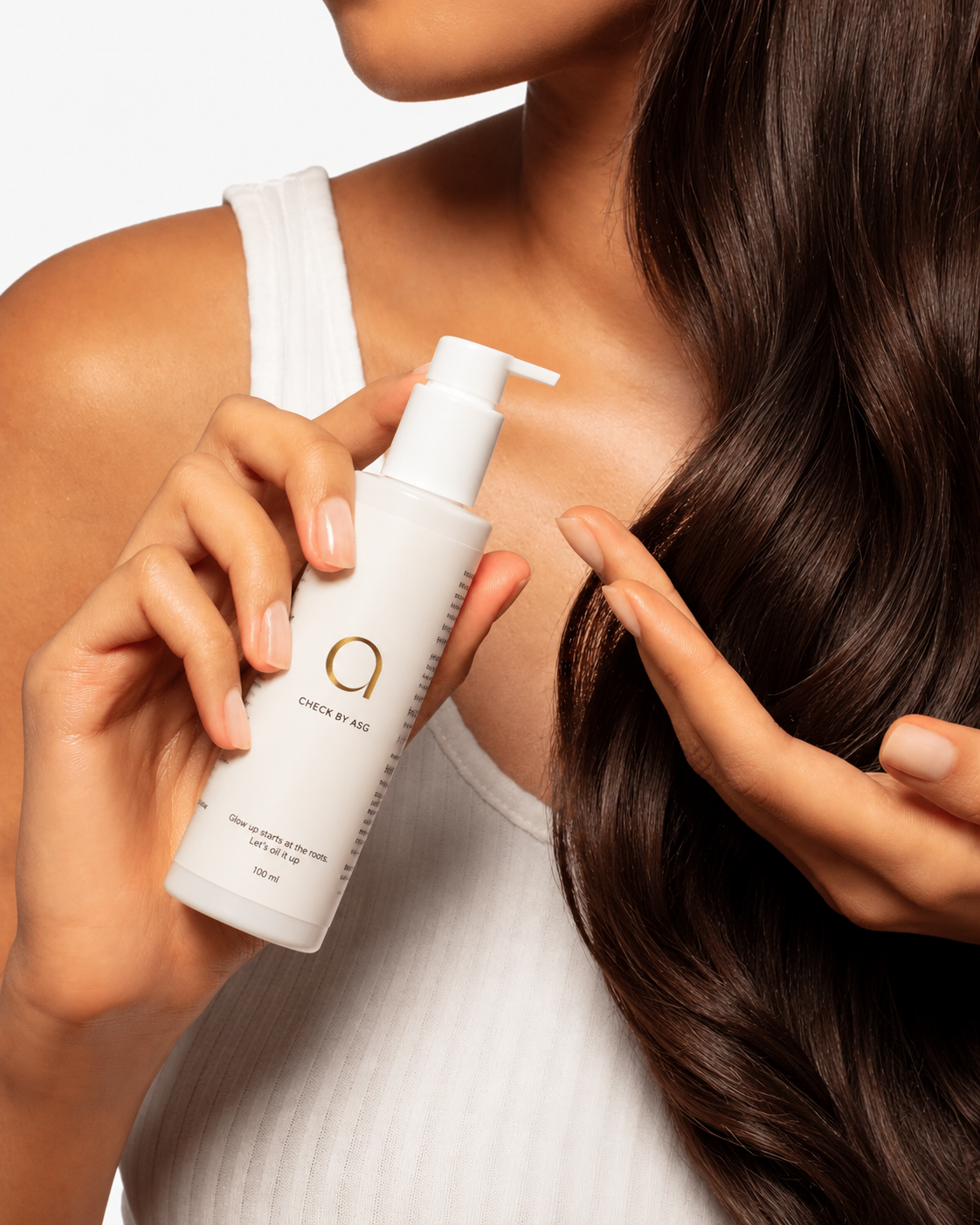
The 60-day rule. One 100ml bottle lasts about four weeks. Most people see the difference at week eight. That is why we sell it as a pair: 2 × 100ml for ₹1,999. Two bottles is one full cycle. With PCOS, that cycle runs alongside your doctor’s plan, not instead of it.
What does not help
Oil alone. We make one, and we are telling you this. No topical herb lowers your androgen levels, and no amount of massage changes a follicle’s genetic sensitivity to DHT.
Crash dieting. Severe calorie restriction is a classic trigger for a second kind of shedding, telogen effluvium, which arrives three months later and makes everything look worse than it is.
Supplements without a test. Biotin, zinc and iron do nothing for a deficiency you do not have, and iron in particular should not be taken blind.
Waiting for it to pass. Unlike hair fall after a fever or a pregnancy, androgen-driven thinning does not resolve on its own. The earlier the cause is managed, the more follicles are still there to respond.
What oiling can support, and which herbs
Our 17-Herb Hair Oil was not designed for PCOS. It was designed for the scalp, and a PCOS scalp has the same needs as any other, plus a few.
Scalp massage is the first reason to oil. Two to three minutes of slow, firm circles with fingertips moves blood through the scalp. A small Japanese study in 2016 found standardised daily scalp massage over 24 weeks was associated with slightly thicker hair; it was a tiny study, and we mention it only because it points the same way as tradition. Manjistha and bhringraj, at 5%, are the herbs in the blend traditionally used to support that circulation.
A calm scalp is the second. Stress travels with PCOS, and a stressed scalp feels tight and sheds more. Jatamansi at 5% and brahmi are the calming side of the blend, and the ritual itself, a steel katori of warmed oil on a Sunday evening, does something for the nervous system that no ingredient list captures.
Less breakage is the third. Hair that is miniaturising is finer and snaps more easily. Onion for sulphur, amla at 5% for the root, and castor and olive to seal the lengths all help the hair you have stay on your head longer.
We list all 17 herbs and their percentages on the ingredients page. None of them is a hormone. All of them are safe on a scalp that is also using a prescribed topical, as long as you leave a gap of a few hours and wash the oil out before applying anything medicated. Check with your dermatologist on the order.
A routine that fits around a medical plan
- Oil two or three times a week, on days you are not applying a prescribed topical, or at least several hours apart.
- Warm a few pumps in your palms, work it onto the scalp in sections, and massage in slow circles for two to three minutes. Be gentle at the parting; it is the thinnest skin and the most sensitive area.
- Leave 30 minutes, or overnight if your scalp is dry. Wash with a mild shampoo once, not twice.
- Patch-test first. Keep the monthly parting photo going.
- Judge the oil at eight weeks on scalp comfort and breakage. Judge the medical plan at six months on density.
If your thinning is at the temples rather than the crown, the pattern may be different, and our post on thinning at the temples and crown, early signs and routine covers that.
Frequently asked questions
Does PCOS hair fall grow back?
Follicles that have miniaturised can produce thicker hair again if androgen activity is brought down early enough, which is why seeing a doctor sooner matters. Follicles that have been dormant for years are harder to recover. Nobody can promise a result, and anyone who does is overstating.
Can hair oil fix PCOS hair loss?
No. Oil cannot change hormone levels. It can keep the scalp healthy, reduce breakage of existing hair, and support circulation through massage while a doctor manages the cause.
Which blood tests should I ask for?
Total and free testosterone, DHEAS, LH and FSH, fasting glucose and insulin, TSH, prolactin, ferritin and vitamin D. Your gynaecologist or endocrinologist may add to this.
Can I oil my hair while using minoxidil?
Usually yes, on different days or several hours apart, with the oil washed out before the medicated application. Confirm the order with your dermatologist.
How long before I see a difference?
Scalp comfort and less breakage in the comb, around four to eight weeks with regular oiling. Density changes from a medical plan, three to six months, sometimes longer. Hair cycles are slow and there is no shortcut.
PCOS hair fall is managed, not fixed, and the managing is mostly done by you and your doctor over months. Oiling is the part of that you can do on a Sunday evening, with your own hands, while the rest takes its time. If you want it ready, two bottles for ₹1,999 covers one full eight-week cycle.
All 17 herbs, in one bottle
Bhringraj, amla, brahmi and 14 more cold-infused herbs — our 17-Herb Ayurvedic Hair Oil is made for hair fall, thinning and slow growth.