
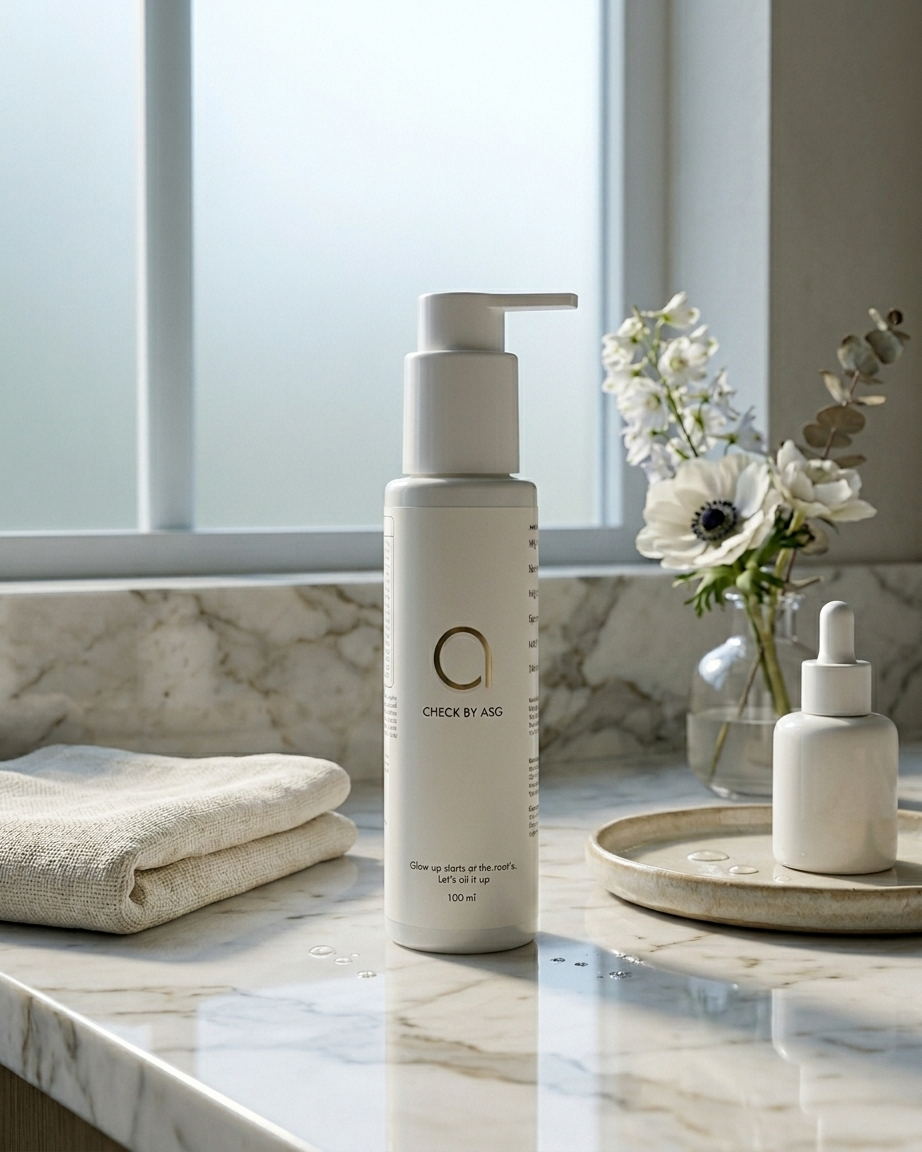
Aloe vera for hair is usually sold as a gel you smear on and hope for the best. In our 17-Herb Hair Oil it plays a narrower and more useful role. Aloe brings water-loving compounds into an oil that would otherwise only seal. That small difference, hydration inside a blend that locks it in, is what lets the other sixteen herbs reach a scalp that is not dry, tight and closed off.
We use aloe vera at 2%. That is a modest number on purpose, and we will explain why below. For now, the short answer to what aloe does for hair is this: it hydrates the scalp, soothes it, and makes the skin a better surface for everything else in the bottle to work on.
This is one of seventeen ingredients in our blend. For how they work together, see our complete guide to all 17 herbs in our hair oil.
This post covers what is in the plant, the difference between hydration and moisture, why the percentage is low, how to use fresh aloe at home if you prefer, and who should be careful.
What is actually in aloe vera
Cut an aloe leaf and you get three layers. The green outer rind, a thin yellow sap just under it called latex, and the clear inner gel. Only the gel is useful for hair. The latex contains aloin, which is a laxative when swallowed and an irritant on skin, and it is the reason a badly prepared home remedy can leave the scalp itchy.
The gel is more than 98% water. The small remainder is where the interest is: long-chain sugars called polysaccharides, the best known being acemannan; a handful of vitamins including C, E and some of the B group; enzymes; and amino acids. The polysaccharides are what make the gel slippery, and they are also humectants, which means they attract and hold water.
Aloe has been used on skin across India, the Middle East and North Africa for a very long time, mostly for burns, cuts and sun. The hair use grew out of that. A scalp is skin, and skin that is calmer and better hydrated grows hair in better conditions.
Hydration is not the same as moisture
This is the distinction most hair advice skips, and it is the whole reason aloe is in an oil.
Hydration is water in the skin. Moisture, in the way hair products use the word, usually means oil on the skin or the strand. They do different jobs. Water plumps the skin cells and keeps the scalp supple. Oil sits on top and slows the water from evaporating. An oil without a humectant can only seal in whatever water is already there, and on a dry winter scalp in Delhi or an air-conditioned office in Bengaluru, there is not much.
Aloe’s polysaccharides pull water towards the skin and hold it. Olive and castor in the same blend then lock it in. Together they do what neither can alone. The scalp ends up hydrated and sealed, rather than greasy and still tight underneath.
A hydrated scalp also matters for the herbs. Dry, flaky skin is a poor surface; it is cracked, it absorbs unevenly, and it is often mildly inflamed. The compounds in bhringraj, amla, jatamansi and manjistha are better off meeting a scalp that is calm and supple. That is what we mean by hydration that lets the herbs work.
What aloe does for the scalp
Three things we are comfortable claiming.
It soothes. Aloe’s reputation on sunburn is well earned, and the same cooling, calming effect applies to a scalp that is tight after a hot wash, a long day under a helmet, or a harsh shampoo. Many people notice this within a session or two.
It hydrates. Covered above. The effect is most obvious on a dry scalp and least obvious on an oily one, which is fine, because an oily scalp does not need it.
It helps with the itch that comes from dryness. Not the itch that comes from dandruff, which is a yeast problem; the itch that comes from skin that has lost water. If you are not sure which you have, our post on dandruff vs dry scalp and how to tell them apart has a one-week test.
What we will not claim is growth. There are a few small studies on aloe for scalp conditions and a long tradition of use, but human research on aloe vera and hair growth specifically is limited. It is a supporting herb, and we regard it as one.
The 60-day rule. One 100ml bottle lasts about four weeks. Most people see the difference at week eight. That is why we sell it as a pair: 2 × 100ml for ₹1,999. Two bottles is one full cycle. Aloe is the herb you feel first, usually as a scalp that stops feeling tight, and the others follow.
Why only 2%
People sometimes ask why aloe is not a bigger share of the bottle, given how well known it is. The honest answer is chemistry.
Aloe gel is water. Oil is not. The two do not stay mixed without an emulsifier, and we do not use one, because an emulsified oil is a cream, and a cream needs preservatives and a different kind of bottle. Cold infusion lets us carry a modest amount of aloe’s useful compounds into the oil without turning it into something else. Push the percentage up and the oil separates, spoils faster, or needs additives we would rather leave out.
So 2% is not a token amount. It is the amount that stays stable in a cold-infused, preservative-free, 100ml pump bottle for the four weeks it takes you to finish it. Apoorva tested that in a Delhi kitchen on her own hair before anyone else’s, which is the only way she works: if she would not use it, she would never ask you to. The story of how the blend was built is on our site.
Aloe in the blend
Aloe sits in the conditioning layer of the oil, alongside the herbs that look after the strand and the skin surface rather than the root.
Olive is its closest partner. Olive is a light emollient that locks in the water aloe attracts, and we wrote about what a Mediterranean oil is doing in an Ayurvedic blend separately. Castor does the same job at the ends, where hair is oldest and driest. Shikakai softens, and heena adds gloss.
Jatamansi at 5% is the other herb that pairs naturally with aloe, because both are about calming. Where aloe cools the skin, jatamansi is traditionally used to settle a scalp that is stressed and tight.
Underneath that layer are the root herbs, bhringraj, amla, manjistha and brahmi, and the cleansing herbs, neem, karanja, reetha and nimbu. We list all 17 herbs and their percentages on the ingredients page.
Because aloe keeps the texture light, the oil is wearable. A few pumps on a damp scalp in the morning does not look greasy by lunch, which is the basis of our non-greasy routine for dry, frizzy hair.
Using aloe at home, and who should be careful
Fresh aloe gel
- Cut a thick outer leaf from a mature plant and stand it upright in a glass for ten minutes so the yellow latex drains out. This step matters.
- Slice off the rind and scoop the clear gel. Blend it smooth or mash it with a fork.
- Apply to the scalp with fingertips, leave for 20 to 30 minutes, and rinse with cool water. Once a week is plenty.
- Use it fresh. It spoils within a day or two, even in the fridge.
This is a good soothing rinse. It is not a substitute for oiling, because it has nothing to seal the water in, and on its own it can leave the hair feeling slightly dry once it evaporates.
In a cold-infused oil
Warm a few pumps in your palms, massage the scalp in slow circles for two to three minutes, and leave 30 minutes or overnight. Two or three times a week. One bottle lasts about four weeks, and results typically show at six to eight weeks. Patch-test first.
Who should be careful
Aloe allergy is uncommon but real, and people who react to onions, garlic or tulips sometimes react to aloe too, as they are related plants. Patch-test behind the ear and wait a day. If you are using fresh gel, never skip the latex-draining step. And if your scalp is red, weeping or losing hair in patches, aloe will not address that; see a dermatologist, and regard oiling as supportive while you do.
Frequently asked questions
Does aloe vera help hair growth?
Not directly, as far as the research shows. Aloe hydrates and soothes the scalp, which supports the conditions hair grows in. In our blend, growth support comes from bhringraj, amla, jatamansi and manjistha.
Can I use aloe vera on my scalp every day?
Fresh gel every day is more than most scalps need and can leave hair feeling dry once it evaporates. Once a week as a rinse is enough. In an oil, two or three times a week.
Why is aloe vera only 2% of the oil?
Because aloe is mostly water and oil is not. Two percent is the amount that stays stable in a cold-infused, preservative-free oil without an emulsifier. More would separate or spoil.
Is aloe vera good for an oily scalp?
It does no harm, but it does the least there. An oily scalp needs balancing, which is nimbu and reetha’s job in the blend, more than it needs hydration.
Can aloe vera cause itching?
Fresh aloe can, if the yellow latex under the rind is not drained; it contains aloin, an irritant. A small number of people are allergic to aloe itself. Patch-test any new product.
Aloe is not the herb that grows hair. It is the herb that makes the scalp a place where hair can be grown, by putting water back and letting the rest of the blend hold it there. If you want to feel that difference over a full cycle, two bottles for ₹1,999 covers the eight weeks it takes.
All 17 herbs, in one bottle
Bhringraj, amla, brahmi and 14 more cold-infused herbs — our 17-Herb Ayurvedic Hair Oil is made for hair fall, thinning and slow growth.