
Brahmi for hair does two jobs. On the scalp it is traditionally used to nourish the follicle and reduce breakage, so hair that grows comes out stronger and snaps less at the mid-length. In the body it is the herb Ayurveda reaches for when the mind is tired, and since stress is one of the most common triggers for hair fall in India, that second job matters more than people expect.
It is not a growth herb in the way bhringraj is. If you are looking for density, you want bhringraj and onion doing the heavy lifting. Brahmi is the quiet support underneath: the herb that keeps the hair you already have from breaking while the others work.
Here is what it does, which brahmi you are actually buying, and how to use it when breakage and stress are the problem.
Which brahmi are we talking about
This trips people up. In most of north India, “brahmi” means Bacopa monnieri, a small creeping plant that grows in wet ground and is best known as a memory herb. In parts of south India and in some older texts, the same name is used for Centella asiatica, which most people know as gotu kola or mandukaparni. They are different plants with overlapping reputations.
Both have been used on the scalp. Bacopa is the one with the stronger tradition for calming the nervous system, and it is the one we use. When you are buying any brahmi product, it is worth checking the botanical name on the label, because the two are not interchangeable and a vague “brahmi extract” could be either.
What brahmi is traditionally used for on the scalp
Ayurvedic texts describe brahmi as cooling, and classical hair oils often paired it with bhringraj and amla as a trio: one for growth, one for the root, one for the strand. Brahmi’s role in that trio is to nourish the follicle so the hair shaft that emerges is less brittle.
In practice, people who use a brahmi-containing oil for a couple of months most often report two things. The first is less breakage, which shows up as fewer short, snapped pieces on the comb rather than fewer full-length strands with a white bulb at the end. The second is a cooler, calmer scalp, particularly in the Delhi summer when the head feels hot by afternoon.
We want to be careful here. Most of the human research on bacopa is about memory and anxiety, taken by mouth. Research on brahmi applied to the scalp is limited, and what exists is mostly on herbal combinations rather than brahmi alone. So we say “traditionally used for” and we mean it. Many people notice the difference. We cannot tell you a percentage, because nobody has measured it properly.
The stress link, and why it matters for hair
Here is the part most hair oil posts skip. Stress does not make hair fall out that week. It pushes a larger share of follicles into their resting phase, and those hairs shed about two to three months later. By the time the shedding starts, the stressful month that caused it is a memory, which is why people are so often confused about why their hair is falling now.
Brahmi comes into this in two ways. The first is tradition: it is the herb Ayurveda has used for a calm mind for a very long time, and that reputation is part of why it ended up in hair oils to begin with. The second is simpler and better supported. A slow, two-to-three-minute scalp massage with warm oil, two or three evenings a week, is itself a small act of stepping off the treadmill. The oil is the reason you sit down. The sitting down is half the benefit.
What brahmi oil will not do is fix the thing that is stressing you. If you are three months into a bad patch at work and the shedding has started, oiling helps the scalp while the cycle rights itself. It does not shorten the cycle much. We explain the delay properly in our post on stress hair fall and the three-month lag.
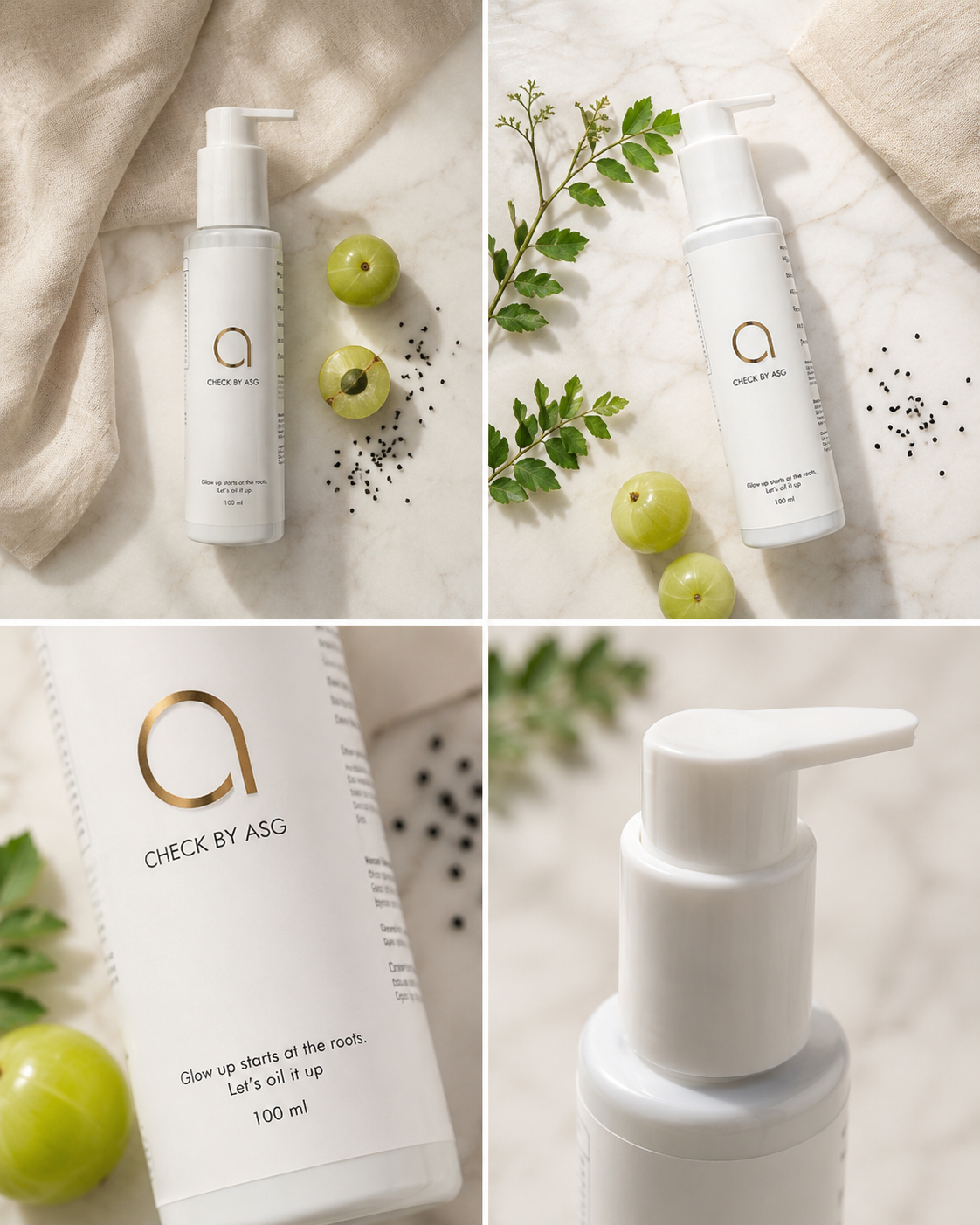
The 60-day rule. One 100ml bottle lasts about four weeks. Most people see the difference at week eight, and with breakage the comb usually tells you before the mirror does. That is why we sell it as a pair: 2 × 100ml for ₹999, buy one get one free. Two bottles is one full cycle.
Brahmi in the blend, and what sits around it
Brahmi rarely works alone in traditional formulations, and we have kept it that way. In our 17-Herb Hair Oil it sits alongside a few herbs that make its job easier. We list all 17 herbs and their percentages on our ingredients page.
- Jatamansi (5%) is the other calming root in the blend, a Himalayan plant that is traditionally used for a stressed scalp. Brahmi and jatamansi together are the “calm” half of the formula. We wrote about it separately in our post on jatamansi for hair growth.
- Bhringraj (5%) is the growth and density herb. Brahmi keeps the new hair from breaking; bhringraj is traditionally what brings it in. Our post on bhringraj for hair covers it.
- Amla (5%) for vitamin C at the root and strength along the strand.
- Shikakai and heena condition the shaft so it bends instead of snapping.
- Castor seals the ends, which is where breakage usually starts.
The whole blend is cold-infused, without heat, which we think matters for a leaf like brahmi whose more delicate compounds do not survive boiling well.
How to use brahmi oil for breakage
Breakage and shedding need slightly different handling. With shedding, the scalp is the whole story. With breakage, the lengths need attention too.
- Do the comb test first. After a dry comb-through, look at what is on the comb. Full-length hairs with a tiny white bulb are shed hairs. Short pieces with no bulb, often with a split or frayed end, are breakage. If you mostly see the second kind, this is the routine for you.
- Warm two or three pumps between your palms. Our oil comes in a pump bottle so you do not pour too much. If you prefer the old way, a steel katori of oil stood in a bowl of hot water for a minute does the same thing.
- Scalp first, slow circles, two to three minutes. Fingertips, not nails. The point is to move the skin, not scratch it.
- Then the lengths and ends. Run what is left on your palms down the hair, concentrating on the last few inches. Do not add more oil for this; the residue is enough.
- Leave it 30 minutes or overnight, then wash. Overnight is fine for dry, breaking hair. Plait it loosely so it does not rub on the pillow.
- Two or three times a week. Not daily. Breaking hair is often over-handled hair, and more handling is not the answer.
Between washes, a wide-tooth comb, a lower setting on the hair dryer, and a cotton or silk pillowcase do more for breakage than any additional product.
When brahmi is not the answer
Oil alone will not fix breakage that has a mechanical or chemical cause. If your hair started snapping after a straightening treatment, bleach, or a new habit of daily heat styling, the damage is in the shaft already and no oil repairs a hair that is already broken. Oil can protect the new growth coming in. The damaged length needs to grow out or be cut.
And if the breakage comes with heavy shedding, a widening parting, tiredness, or changes in weight or periods, please see a doctor and ask for a basic blood panel. Low iron, thyroid problems and protein deficiency are common causes of brittle hair in Indian women, and they are easy to test for and manage with the right medical help. Oiling is a good thing to do alongside. It is not a substitute.
Apoorva, who started Check by ASG in her Delhi kitchen, puts it this way: before waiting for someone else to check on you, learn to check on yourself. That means the comb test, and it means the blood test too. You can read about why she built the brand on our story page.
Frequently asked questions
Is brahmi good for hair growth?
Brahmi is traditionally used for follicle support and less breakage rather than for growth directly. Hair that breaks less looks longer and fuller over time, so the effect is real, but if growth is the main goal, look for bhringraj and onion in the blend alongside brahmi.
Can I apply brahmi powder directly to my scalp?
You can make a paste with water or curd and use it as a mask, which is an old practice. It can be drying for some scalps and is messy to wash out. A brahmi-infused oil is gentler for regular use, and easier to keep up two or three times a week.
Does brahmi oil help with stress hair fall?
It supports the scalp during the shedding phase and the massage itself helps you slow down. It does not shorten the two-to-three-month cycle that stress sets off. If the shedding is heavy or has lasted more than three months, see a doctor.
How long does brahmi take to show results on breakage?
Many people notice fewer short broken pieces on the comb by week four, and a clearer difference around week eight. The hair that was already damaged does not repair; the improvement is in the new length coming through.
Is brahmi safe for colour-treated hair?
Yes. Brahmi does not strip or alter colour. Our oil contains no mineral oil, silicones or synthetic fragrance and is suitable for colour-treated hair. Patch-test first, as with any new product.
Brahmi is not the herb that will make your hair grow faster. It is the herb that makes sure what grows does not snap off before it gets anywhere, and it is a small, calming ritual for a head that has been carrying too much. If you want it in a full blend with the growth herbs around it, the two-bottle pack covers one eight-week cycle for ₹999.