
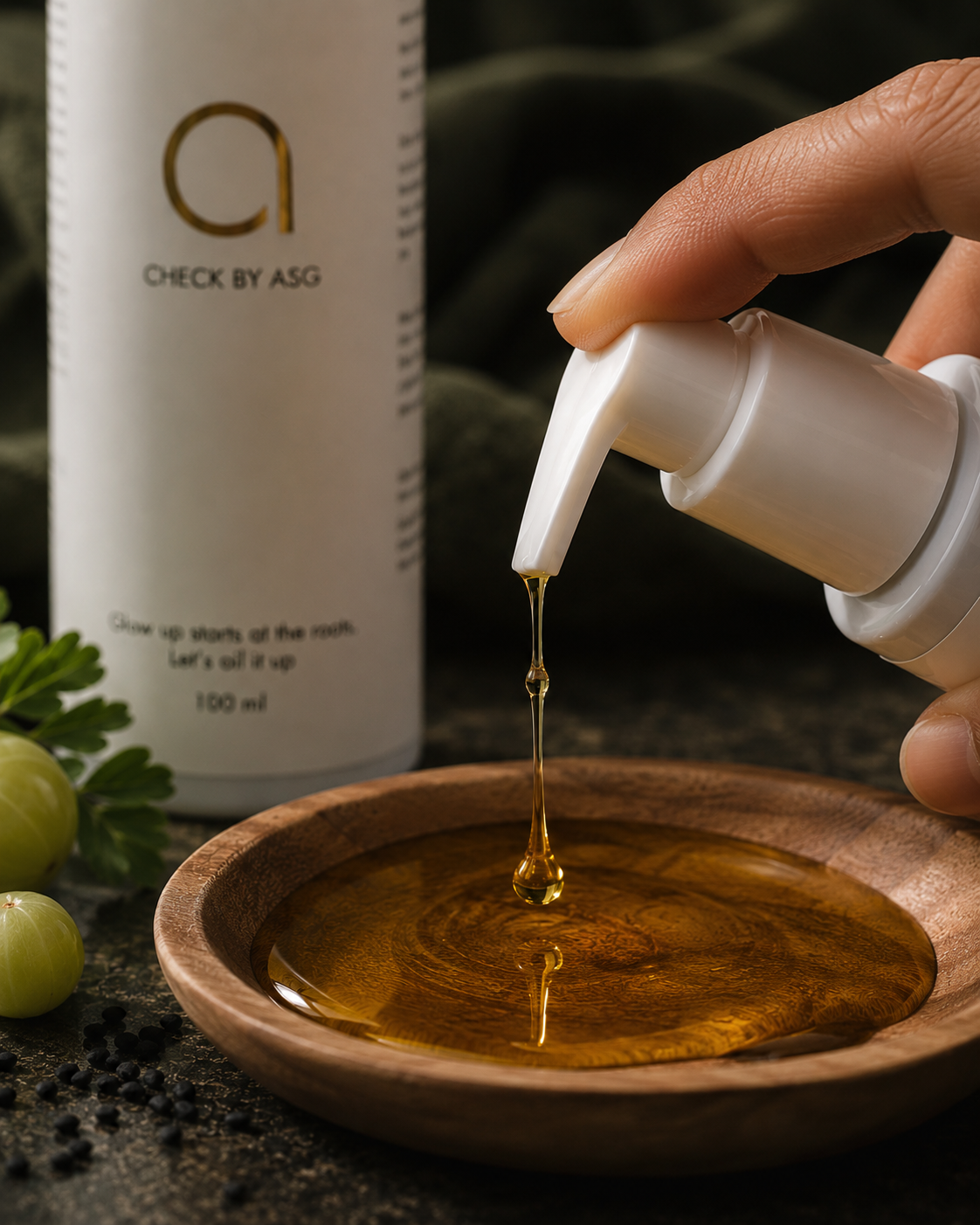
Yes, hair oil can cause hair fall, but almost never because of the oil itself. It happens because of how the oil is used. Too much, left too long, rubbed in too hard, tied up too tight, or washed out with something harsh. We sell a hair oil and we will say it plainly: a bad oiling routine can leave more hair on the pillow than no oiling at all.
The other half of the answer is that most of the hair you see fall during oiling was already on its way out. Hairs in the resting phase are loosely anchored, and a massage simply moves their exit forward by a few days. That is shedding you were going to see anyway, not hair fall caused by oil.
For the wider picture, our guide to the most common hair fall reasons explains how to tell one cause from another.
Below are the five habits that genuinely turn oil into a problem, how to tell them apart from normal shedding, and the simple fixes for each.
First, the difference between shedding and hair fall
Everyone loses fifty to a hundred hairs a day. Those hairs finished their growth cycle weeks ago and have been sitting in the follicle waiting for a nudge. Washing, combing and massaging provide the nudge, which is why the drain looks worse on oil days. If you oil twice a week, you are seeing three or four days of normal shedding in one sitting.
Hair fall worth worrying about is different. It is a sustained rise in daily loss over weeks, hair coming out with white bulbs in clumps, a widening parting, or thinning at the temples. If your drain count is high only on oiling days and normal in between, the oil is not the problem.
A quick test: on a non-oiling, non-washing day, comb dry hair twenty times over a white sheet of paper and count. Under twenty hairs is unremarkable. If that count is also climbing week on week, look beyond the oil to stress, diet, hormones or a blood test, and read our post on the most common causes of hair fall in your twenties and thirties.
The five things that turn oil into a hair fall problem
1. Too much oil, left on too long
This is the big one. A palmful of oil left on the scalp for two days does not feed the roots. It sits on the follicle opening, mixes with sweat and dust, and becomes a sticky layer. That layer blocks the follicle, itches, and feeds the yeast that causes dandruff, which thrives on oil. An irritated, flaky scalp sheds more. In a humid city, this can happen within a single weekend.
The fix is dose and time. A few pumps, enough to massage with, not enough to drip. Thirty minutes to a few hours for most scalps. Overnight only if your scalp is dry and the weather is not humid. Our post on overnight oiling and who should skip it lays out who can and who should not.
2. Rough massage and tugging
Massage is supposed to move the scalp over the bone. It is not supposed to pull on the hair. Vigorous rubbing, nails digging in, and the fast up-and-down scrubbing some people learned at a salon all pull on hairs that are loosely anchored and break hairs that are not. Fingertip pads, slow circles, two to three minutes, and the fingers should never slide through the hair.
3. Combing oiled hair hard, or combing it wet
Oiled hair is slippery and tangles less, which tempts people to run a fine comb through it from root to tip. Oil also adds weight. A fine comb dragged through weighted hair from the root snaps strands and pulls out resting hairs. Then the hair is washed, and wet hair is at its weakest, and it gets combed again. Use a wide-tooth comb, start at the ends, work up, and never comb wet hair from the root.
4. Tying oiled hair tight, or sleeping in a tight bun
Oil plus a tight ponytail is a bad pair. The oil lets the hair slide inside the elastic, so people tie it tighter to hold it, and the tight tie pulls on the hairline and crown for hours. Sleeping with oiled hair in a tight bun is the same pull all night, plus friction against the pillow. A loose plait or a soft scrunchie, and a cotton pillow cover or a soft cloth wrap if sleeping with oil in.
5. Harsh washing to get the oil out
The last mistake comes after the oil. People shampoo three times with a strong cleanser and very hot water to remove every trace, and the scalp is left stripped, dry and irritated. It responds by producing more oil, and the cycle repeats with a worse scalp each time. Apply shampoo to lightly damp hair so it grips the oil, do two gentle rounds, use lukewarm water, and let the oil you chose do some of the work. Ours is blended with Reetha and Shikakai, which rinse out more cleanly than a plain oil.
The 60-day rule. One 100ml bottle lasts about four weeks. Most people see the difference at week eight. That is why we sell it as a pair: 2 × 100ml for ₹1,999. Two bottles is one full cycle.
Two other reasons oil seems to cause hair fall
Beyond the five habits, two situations get blamed on oil unfairly.
Oiling during a flare. If you have active, greasy dandruff, a fungal scalp infection, or folliculitis (small painful bumps), oiling can make it worse because the organisms involved feed on oil. The oil did not cause the hair fall, the condition did, and the oil gave it a meal. Settle the scalp first, with a doctor’s help if needed, then bring oil back slowly in short sessions. Our post on ayurvedic hair oil side effects, real and myth covers when to pause.
The wrong oil for your scalp. Heavy oils with mineral oil as the base, or oils with synthetic fragrance, irritate some scalps outright. An itchy, red scalp after oiling is a sign to stop that oil and patch-test the next one. An allergic reaction to any ingredient, natural or not, causes shedding until the reaction settles. This is why we ask everyone to patch-test behind the ear for a day before using ours, even though it is dermatologically tested.
What a safe oiling session looks like
Here is the routine that avoids all five mistakes, start to finish. Sunday evening, after dinner, hair dry and unwashed. Two or three pumps warmed between the palms. Fingertip pads on the scalp, slow circles, two to three minutes, moving the skin rather than the hair. A little of what is left on the palms pressed into the ends. Leave it for an hour, or overnight if the scalp is dry and the room is not humid, with a loose plait and a cotton cover. Wash in the morning with shampoo applied to barely damp hair, two gentle rounds, lukewarm water. Pat dry, wide-tooth comb from the ends up once the hair is mostly dry.
Done this way, two or three times a week, oiling reduces the breakage that makes hair fall look worse and keeps the scalp in a state where follicles can work. The drain on oiling day will still have hair in it. The drain across the week should have less.
The herbs that keep the scalp out of trouble
A well-made oil is designed to avoid the buildup problem rather than cause it. In ours, Reetha, the soapnut, is a gentle cleanser inside the oil, and Shikakai conditions while helping everything rinse away without residue. Karanja clears buildup and helps protect the scalp from irritation. Neem is traditionally used for itch and dandruff, which is exactly the trouble that heavy, old oil invites. Nimbu, lemon, balances a scalp that over-produces oil.
On the strengthening side, Onion brings sulphur, Brahmi supports the follicle against breakage, and Castor seals the ends so combing does less damage. Olive is the light emollient that keeps the blend from feeling heavy. Aloe Vera adds hydration without weight. We use no mineral oil, no silicones and no synthetic fragrance, which removes three of the commonest irritants. We list all 17 herbs and their percentages on the ingredients page so you can check for anything you know your scalp reacts to.
Frequently asked questions
Why does my hair fall more when I oil it?
Massage and washing loosen hairs that had already finished their growth cycle and were waiting to fall. Oiling day collects several days of normal shedding in one sitting. If your count on non-oiling days is normal and stable, the oil is not the cause.
Can leaving oil overnight cause hair fall?
It can, if your scalp is oily, the weather is humid, or you have dandruff. Oil left on for many hours collects dust, blocks follicles and feeds the yeast behind dandruff. Dry scalps in dry weather can manage overnight; everyone else does better with thirty minutes to a few hours.
Does oiling daily cause hair fall?
Daily oiling without daily washing builds up on the scalp and usually makes things worse. Two or three times a week, washed out each time, is the routine that works for most people.
Should I stop oiling if I have dandruff?
Pause heavy or overnight oiling during a greasy dandruff flare, since the organisms involved feed on oil. Short thirty-minute sessions with an oil that contains Neem and Karanja, washed out properly, are usually fine once the flare settles. See a doctor if the flare is severe or painful.
How do I know if my hair oil is causing a reaction?
Itch, redness, burning or small bumps within a day of oiling point to irritation or allergy. Stop that oil, let the scalp settle, and patch-test any new oil behind the ear for 24 hours before full use.
Oil does not cause hair fall. Too much of it, left too long, handled too roughly, tied too tight or washed out too harshly does. Fix those five things and oiling goes back to being what it has always been in Indian homes, a calm, useful habit. If you want an oil built to rinse clean and keep the scalp calm, two bottles of our 17-Herb Hair Oil for ₹1,999 is one full eight-week cycle of doing it right.
All 17 herbs, in one bottle
Bhringraj, amla, brahmi and 14 more cold-infused herbs — our 17-Herb Ayurvedic Hair Oil is made for hair fall, thinning and slow growth.