
Hair fall on a vegetarian diet is common, and it is usually not because the diet is vegetarian. It is because the plate is heavy on rice, roti, potato and sugar and light on dal, curd, paneer and beans. Hair is made of a protein called keratin, and when the body runs short of protein it stops spending on hair first. The strands grow finer, the shedding rises, and three months after a bad stretch of eating the drain fills up.
A vegetarian diet can comfortably supply everything hair needs. It just needs a little more planning than a diet with eggs and fish, and a couple of blood tests to catch the gaps that Indian vegetarians most often have. Below is a straightforward diet and oiling plan, built around food you can buy in any sabzi mandi, and honest about where a doctor comes in.
For the wider picture, our guide to the most common hair fall reasons explains how to tell one cause from another.
Oiling, in this plan, is the supportive half. It keeps the scalp clean and the strand strong while the diet does the slower work at the root.
How protein shortage shows up in hair
Keratin is built from amino acids, and the body has a strict order of priorities. Muscle, organs and immune function come first. Hair and nails come last. When daily protein is low for a few weeks, follicles are quietly moved into the resting phase to save resources, and the hair from those follicles falls out two to three months later. The pattern overlaps with stress hair fall during exams, a new job or a crash diet.
The signs are specific. Hair that feels thinner in a ponytail, strands that snap easily, nails that peel or show ridges, and a general tiredness that does not match your sleep. Two rotis with aloo sabzi for lunch and Maggi for dinner for a couple of months is the usual story, and it is fixable.
The common guideline for adults is roughly 0.8 to 1 gram of protein per kilogram of body weight per day, so around 50 to 60 grams for most people. Many Indian vegetarian plates land at half of that without anyone noticing, because the bulk of the meal is grain. We go through the other common causes in our post on hair fall reasons in your twenties and thirties.
The four gaps Indian vegetarians most often have
Protein is the headline, but it rarely travels alone. Four nutrients come up again and again in blood tests of vegetarians with hair fall.
| Nutrient | Why it matters for hair | Vegetarian sources | What to do |
|---|---|---|---|
| Protein | Builds keratin. Shortage thins and sheds hair within months. | Dal, rajma, chana, moong, soya chunks, tofu, paneer, curd, milk, peanuts, eggs if you eat them. | A protein source at every meal, not just dinner. |
| Iron | Carries oxygen to follicles. Low ferritin is one of the commonest causes of hair fall in Indian women. | Spinach, methi, beetroot, dates, jaggery, rajma, chana, sesame, poha with lemon. | Plant iron absorbs poorly on its own. Pair with vitamin C (lemon, amla, tomato) and keep tea and coffee an hour away from meals. Get ferritin tested. |
| Vitamin B12 | Needed for red blood cells and hair cell division. Found almost only in animal foods. | Milk, curd, paneer in small amounts. Fortified foods. Often a supplement. | Surveys consistently find low B12 in Indian vegetarians. Test it. Supplement if low, on a doctor’s advice. |
| Zinc and vitamin D | Zinc supports follicle repair. Vitamin D is low in most urban Indians who work indoors. | Pumpkin seeds, cashews, chana, whole grains for zinc. Sunlight and fortified milk for D. | Fifteen minutes of morning sun on arms and face. Test vitamin D if hair fall persists. |
We cover the iron picture in detail in our post on iron deficiency and hair fall in Indian women, because it deserves its own page.
The 60-day rule. One 100ml bottle lasts about four weeks. Most people see the difference at week eight. That is why we sell it as a pair: 2 × 100ml for ₹1,999. Two bottles is one full cycle.
A day of vegetarian eating that feeds hair
This is not a diet chart. It is an example of how an ordinary Indian day can hit the protein mark without anything exotic.
Morning. A bowl of curd with a spoon of peanuts or a glass of milk. If breakfast is poha or upma, add a handful of roasted chana or sprouts to it. Squeeze lemon over the poha for the iron.
Lunch. Two rotis or a bowl of rice, a full katori of dal (not a thin soup, a proper thick one), a sabzi with a green leafy element twice a week, and a small bowl of curd. A piece of paneer or a side of rajma or chole twice a week lifts the number noticeably.
Evening. Roasted chana, a handful of peanuts, or a bowl of sprouts. This is the snack that replaces biscuits, and it is where most of the difference comes from.
Dinner. Lighter, but still with a protein. Moong dal khichdi with curd, or a tofu or soya chunk sabzi, or besan chilla.
Three small rules on top. Keep tea and coffee away from meals so they do not block iron. Eat one amla, fresh or as a murabba, most days for vitamin C. And if you are on a weight-loss plan, cut carbs and sugar before you cut dal and curd. The crash diets that cause the worst hair fall are the ones that drop protein along with everything else.
The oiling plan that goes with it
Diet works at the root over months. Oiling works on the scalp and strand over weeks, and the two together are better than either alone. The point of oiling during a protein recovery is to protect the hair you have from breaking while the new, stronger hair grows in.
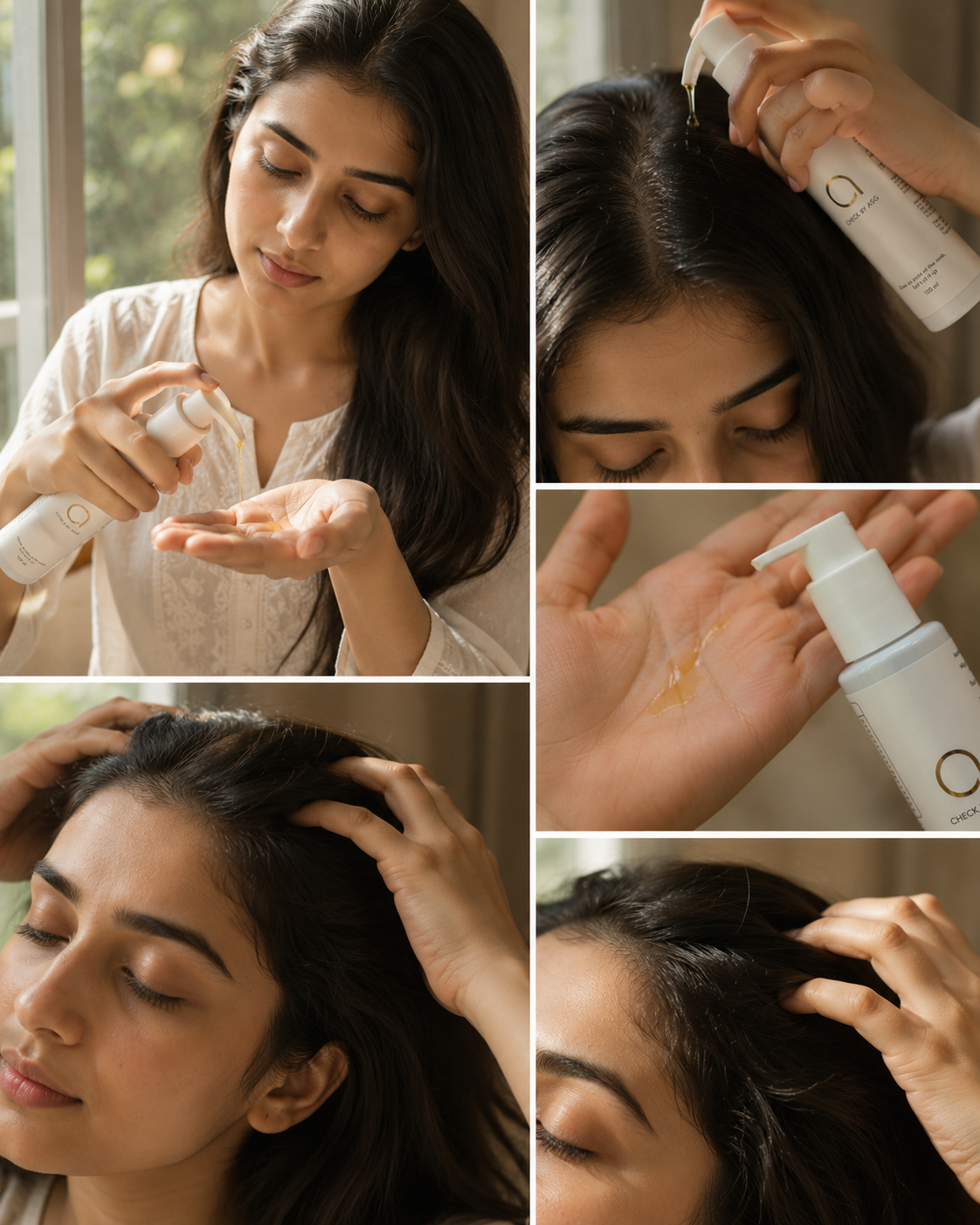
- Three times a week for the first eight weeks. Sunday, Wednesday, Friday evenings work for most households. Warm a few pumps in the palms, massage the scalp in slow circles for two to three minutes, press the rest into the ends.
- Leave thirty minutes to overnight, depending on your scalp. Dry scalps can go overnight. Oily scalps should keep it to an hour.
- Wash gently. Lukewarm water, two light rounds of shampoo, wide-tooth comb from the ends once mostly dry. Protein-starved hair is brittle, and rough handling undoes the work.
- After eight weeks, drop to twice a week and keep the diet changes. The diet is the part you keep for life.
Take a photo of your parting on day one and again at week eight. The diet change shows in new growth at the roots first.
The herbs that support a recovering head of hair
Three of our seventeen herbs are particularly relevant here. Amla, at 5%, is itself one of the richest vegetarian sources of vitamin C, and in the oil it brings that vitamin C to the root, where it is traditionally paired with iron-rich diets. Onion contributes sulphur, which is a building block of keratin, and is traditionally used to strengthen and thicken hair that has gone fine. Brahmi supports the follicle and is the herb we lean on for breakage.
Around them, Bhringraj supports density and growth, Manjistha supports scalp circulation so the nutrients from a better diet reach the follicle, and Shikakai, Henna, Olive and Castor condition and seal the strand so brittle hair snaps less in the comb. Neem and Karanja keep the scalp clean while all of this happens. We list all 17 herbs and their percentages on the ingredients page.
None of these replaces a katori of dal. We would rather you fix the plate and use a plain oil than buy ours and keep eating Maggi. But a scalp oil built for strength and a diet built for protein are a good pair.
When to see a doctor, and what to ask for
If you have eaten well for eight weeks and oiled consistently and the shedding has not slowed, do not keep guessing. Ask a doctor for a blood panel covering ferritin, vitamin B12, vitamin D and thyroid function. These four explain most vegetarian hair fall that diet alone does not fix, and each has a simple correction once it is found. Oiling is supportive through all of it, but it cannot put B12 into your blood.
Apoorva grew up in a small town where her grandfather oiled her hair and her grandmother made sure there was dal on the table every day. The two were never separate in that house. That is where this brand started, and it is still the simplest advice we have: feed the root from inside, protect it from outside, and check on yourself before someone else has to.
Frequently asked questions
Does a vegetarian diet cause hair fall?
Not by itself. A vegetarian diet low in protein, iron and B12 causes hair fall, and that is the common Indian pattern of grain-heavy, dal-light meals. With a protein source at every meal and the right blood tests, vegetarians grow hair as well as anyone.
How much protein do I need to stop hair fall?
The usual guideline is around 0.8 to 1 gram per kilogram of body weight per day, roughly 50 to 60 grams for most adults. A katori of dal, a bowl of curd, a handful of peanuts and some paneer or beans across the day gets most people there.
Which vegetarian foods are best for hair growth?
Dal, rajma, chana, moong and soya for protein; spinach, methi, beetroot and dates for iron, paired with lemon or amla; curd, milk and paneer for protein and some B12; pumpkin seeds and nuts for zinc. Amla most days for vitamin C.
Can hair oil make up for a poor diet?
No. Oil works on the scalp and the strand, not on the nutrients in your blood. It reduces breakage and keeps the scalp healthy while a better diet rebuilds the hair from the root. The two work best together.
How long after fixing my diet will hair fall stop?
Expect two to three months, because the hairs that were pushed into the resting phase still need to fall out before the new growth shows. Oiling during that window keeps the remaining hair from breaking and makes the wait less visible.
Fix the plate first, test for the four common gaps, and protect the hair you have while the new growth comes in. If you want the oil we built for the protecting part, two bottles of our 17-Herb Hair Oil for ₹1,999 covers the same eight weeks your diet needs to show.
All 17 herbs, in one bottle
Bhringraj, amla, brahmi and 14 more cold-infused herbs — our 17-Herb Ayurvedic Hair Oil is made for hair fall, thinning and slow growth.