
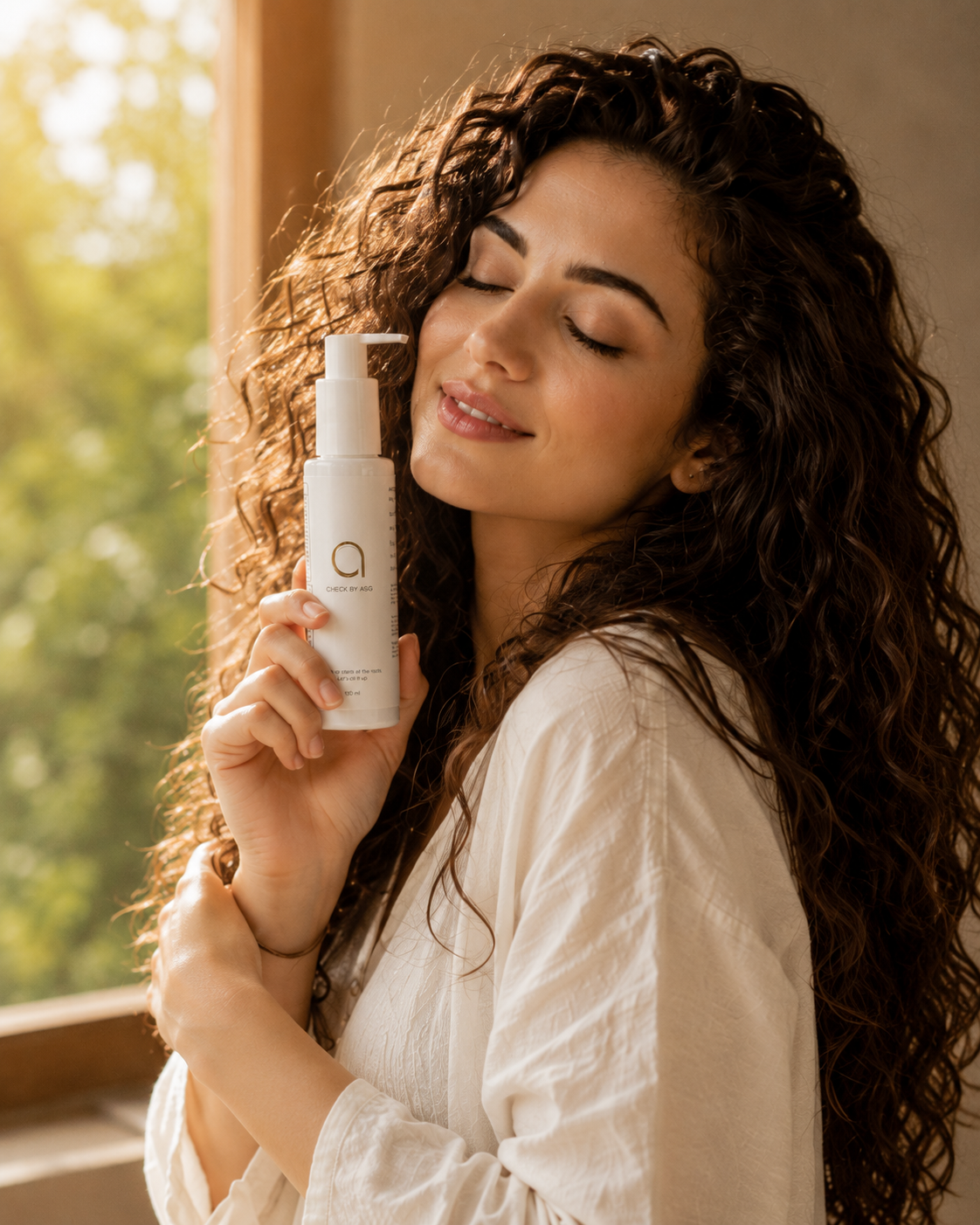
Hair oil for coloured hair is not only allowed, it is usually needed more than on hair that has never been touched. Every colouring process, from a box dye in a Bengaluru bathroom to a full balayage in a Bandra salon, works by lifting the cuticle and stripping away the strand’s natural lipid layer so that pigment can get in. What is left is hair that is more porous, drier, and more prone to breakage. Oil puts some of that lipid back.
The rules are short. Wait 48 to 72 hours after colouring before the first oiling. Use a plant oil, not a mineral oil or silicone product that will dull the colour over weeks. Keep hot oil and lemon away from coloured hair. And if your hair is bleached or very light, strand test any oil that contains plant colourants, ours included.
If you are new to oiling, start with how to apply hair oil correctly. This post builds on that method.
Below we explain what colouring and chemical treatments actually do to the strand, whether oil fades colour, how to adjust the routine for each kind of treatment, and which herbs matter most for hair that has been through a process.
What colouring and chemical processes do to the strand
Permanent colour uses an alkaline agent, often ammonia or a gentler substitute, to swell the hair and open the cuticle, and peroxide to break down the natural pigment and develop the new one inside the cortex. The cuticle never closes quite as tightly afterwards. The outer lipid layer, a thin coat of fatty acid that makes healthy hair water-resistant and slippery, is largely removed.
Bleach does the same thing harder. The more levels of lift, the more porous the hair, which is why blonde and pastel hair feels like straw and tangles the moment it is wet.
Smoothening, keratin, and rebonding work differently. They break and re-form the disulphide bonds that give hair its shape, using heat and either strong alkaline or acidic solutions. The hair comes out straight and, for the first few weeks, glossy. Underneath, it has lost some of its structural strength and is more vulnerable to breakage at the mid-length.
In all these cases the hair has become more porous. Porous hair drinks up water when wet, swells, and then loses that water fast, which is the cycle behind frizz, dullness, and snapping. Oil interrupts the cycle by sitting in and on the strand, slowing both the uptake and the loss.
Will oil fade the colour
This is the fear that stops most people, and the honest answer depends on the kind of colour.
Permanent colour lives inside the cortex. Plant oil does not strip it. What fades permanent colour is washing with harsh shampoo, hot water, sun, and heat styling. Oil, if anything, slows fading by reducing how much the cuticle lifts during washing.
Semi-permanent, demi-permanent, and direct dyes sit on or just under the cuticle. The bright reds, coppers, blues, and pinks are in this group. They fade with every wash regardless, and any routine that involves an extra wash, such as rinsing out oil, will shift them slightly faster. The oil is not stripping the colour; the water is. If you have a fashion colour you want to keep, oil the lengths on the evening before a planned wash rather than adding washes.
Henna and indigo users are a third case, and a happier one. Plant colourants bond with the keratin and are not disturbed by oil at all. Many people who henna their hair have oiled it for decades with no loss of colour.
What does dull colour is buildup. Mineral oil and non-soluble silicones accumulate over weeks into a film that makes any colour look flat and brassy. We explain why in our post on mineral oil and silicones in hair products. A plant oil that washes out does not have this effect.
When to start, and how, by treatment
| Treatment | Wait before first oiling | Routine | Watch for |
|---|---|---|---|
| Permanent colour, global or root touch-up | 48 to 72 hours | Normal: scalp and lengths, 2 to 3 times a week, 30 min to overnight | Harsh shampoo afterwards; use a mild one |
| Highlights, balayage, bleach | 72 hours | Lengths-first; 1 pump on ends on non-wash days; scalp session once a week | Strand test any oil with plant colourants; hair is very porous |
| Fashion or direct dye | 72 hours | Oil only on the evening before a planned wash; lengths only | Extra washes shift the colour |
| Henna or indigo | 24 hours after the paste is fully rinsed | Normal routine; oil helps the colour look deeper and less dry | Nothing specific; this is a happy pairing |
| Keratin or smoothening | As the salon advises, usually 3 days to 2 weeks | Lengths only for the first month; no tying, no overnight; then normal | Breakage at mid-length; be gentle with the comb |
| Rebonding or straightening | As the salon advises, often 1 to 2 weeks | Light application on lengths; avoid heavy scalp sessions for a month | Hair is structurally weaker; low pressure in massage |
The 60-day rule. One 100ml bottle lasts about four weeks. Most people see the difference at week eight, which for coloured hair is usually when the lengths stop feeling like a different material from the roots. That is why we sell it as a pair: 2 × 100ml for ₹1,999. Two bottles is one full cycle.
What to avoid on coloured and treated hair
Hot oil. Warm in your palms is fine; oil heated in a pan is not. Heat lifts the cuticle, which is the last thing freshly coloured hair needs.
Lemon juice, or any neat citrus. It lightens hair in sunlight and will shift a toner or a fashion colour unevenly. Nimbu infused inside an oil, at a small proportion, is a different thing and does not behave this way, but keep the raw fruit away.
Overnight oiling in the first two weeks after colour, especially on bleached hair. The hair is at its most porous and oil left for eight hours on a scalp that has just had chemicals on it can irritate. Thirty to sixty minutes is plenty until the scalp settles.
Hard, raking massage. Treated hair snaps. Use fingertips, move the scalp rather than the hair, and keep pressure lighter than you would on untreated hair.
Sulphate-heavy shampoo to wash the oil out. It strips colour faster than the oil ever could. One wash with a mild shampoo removes a plant oil blend; if it does not, you used too much oil.
The herbs that matter for treated hair
Coloured and chemically treated hair has two needs: put lipids and moisture back into a porous strand, and protect the scalp that has had chemicals sitting on it. The blend is built for both.
For the strand, olive is the light emollient that helps lock moisture into the lengths. Aloe vera at 2% adds water-based hydration, which porous hair takes up readily. Shikakai softens and conditions. Heena, as an infusion rather than a paste, gives a smooth, glossy finish without staining; we explain how that works in heena in hair oil, conditioning without staining. Castor seals the ends, which on bleached hair are the first thing to go. Brahmi is traditionally used for breakage, which is the main risk after smoothening.
For the scalp, neem and karanja help with the irritation and buildup that follow a chemical service. Jatamansi at 5% calms a scalp that has been through something. Amla, also at 5%, is the vitamin C and shine herb.
Then there is neeli indigo, at 5%. On naturally dark or dark-coloured hair, it helps keep the colour looking deep rather than faded, which is why it was included; we wrote about it in neeli indigo for colour depth without dye. In an oil infusion the pigment is not activated, so there is no dyeing effect. On bleached, blonde, or pastel hair we still ask you to strand test, because very porous hair can behave unpredictably with any plant colourant, and we would rather you test a hidden section than take our word for it.
The oil is made for all hair types including colour-treated, is dermatologically tested, and contains no mineral oil, silicones, or synthetic fragrance. We list all 17 herbs and their percentages on one page so you can check every one against your colourist’s advice.
One quieter benefit: many people colour because of early greys, and with amla and neeli indigo in the routine, dark hair often looks deeper between appointments, which for some stretches the gap from four weeks to six. That is not reversing grey, and we do not claim it. Apoorva’s own reason for building indigo into the blend was her grandfather’s habit of adding neel to his oil, which is part of the story of how the brand began.
Frequently asked questions
Can I oil my hair after colouring it?
Yes, after a short wait. Give permanent colour 48 to 72 hours so the cuticle can close and the colour can settle, then oil as normal. Coloured hair usually needs oil more than uncoloured hair, because the colouring process strips the strand’s natural lipids.
Does hair oil fade hair colour?
Plant oil does not strip permanent colour. What fades colour is washing, heat, and sun. Semi-permanent and direct dyes, the bright reds and fashion shades, sit on the surface and can fade a little faster with any routine that involves more washing, oil included. Mineral oil and silicone buildup can make any colour look dull.
Is this oil safe on bleached or highlighted hair?
It is made for all hair types including colour-treated, and it contains no mineral oil, silicone, or synthetic fragrance. Because it includes heena and neeli indigo as infusions, we suggest a strand test on very light or bleached hair before a full application, as we would for any product with plant colourants, even though the infusion does not deposit visible colour in normal use.
Can I oil after keratin or smoothening?
Follow the salon’s waiting period, usually three days to two weeks, during which hair should not be tied, washed, or oiled. After that, light oiling on the lengths helps hair that has been through a strong chemical process. Avoid heavy overnight scalp sessions for the first few weeks.
Will the indigo in the oil darken my coloured hair?
Not in the way indigo paste does. In an oil infusion the indigo pigment is not activated, so there is no dyeing effect. On naturally dark hair it helps keep the colour looking deep. On light, bleached, or pastel-toned hair, strand test first, because plant colourants can behave differently on very porous hair.
Colour and chemical services take something out of hair, and oil is the simplest way to put some of it back. Wait three days, use a plant oil that washes out, go gently on the scalp, strand test if your hair is light, and give it eight weeks. If you want a blend made with colour-treated hair in mind, two bottles for ₹1,999 is one full cycle.
All 17 herbs, in one bottle
Bhringraj, amla, brahmi and 14 more cold-infused herbs — our 17-Herb Ayurvedic Hair Oil is made for hair fall, thinning and slow growth.