
Short answer
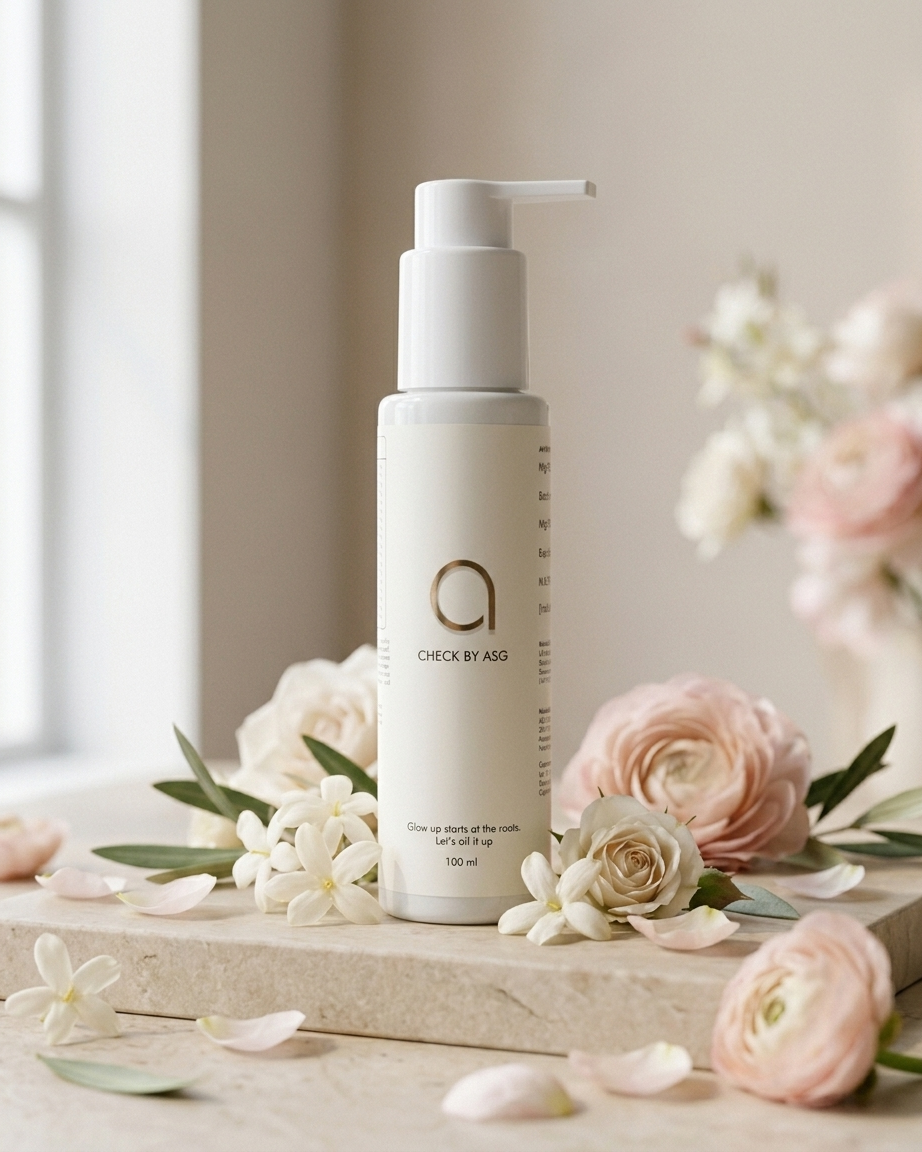
Henna inside an oil does not stain. The dye molecule in the leaf is only released when ground henna meets water and acid, which is what a paste does. Cold-infused in oil, heena conditions the strand and adds gloss instead. Paste and oil are not interchangeable.
Henna oil for hair is a different thing from henna paste, and the difference is the whole point. Henna paste stains. It is a dye, and a good one. Heena cold-infused into an oil does not stain at the amount we use, because the dye molecule in the leaf is only released when ground henna meets water and a little acid and is left to sit. What comes through into oil is the other half of what henna has always been known for: conditioning, gloss, and a cooler scalp.
That is why heena is in our 17-Herb Hair Oil. Not for colour, which neeli indigo handles in its own quiet way, but for the strand. Henna is traditionally used to coat and smooth the hair shaft, and it does this without the drying, stiff feeling that a paste can leave behind.
This is one of seventeen ingredients in our blend. For how they work together, see our complete guide to all 17 herbs in our hair oil.
This post covers what heena is, why the paste conditions and dries at the same time, why oil-infused henna does not colour hair, how to use it, and one safety warning about so-called black henna that we would ask everyone to read.
What heena is
Heena, henna, mehndi: all the same plant. Lawsonia inermis is a tall shrub that grows across Rajasthan, Gujarat, Punjab and much of the Middle East and North Africa. The leaves are dried and ground into the green powder you know.
Inside the leaf is a molecule called lawsone. On its own it is a red-orange pigment that binds to the keratin in hair, skin and nails. In the dry leaf it is locked up in a precursor form, and it is released only when the powder is mixed with water, left for several hours, and ideally given a little acid, lemon or tea, to help it along. That is the “dye release” every mehndi artist waits for. Without water and time, the lawsone mostly stays put.
The leaf also carries tannins and a range of other compounds, and those are what give henna its second reputation: as a conditioner that makes hair feel thicker, look glossier, and break less. For centuries across India it was used for both jobs at once, which is why a grandmother’s henna evening left hair that was darker and also softer.
Why henna paste conditions and dries at the same time
A henna paste works by coating the hair shaft and binding to its outer layer. The lawsone slips under the cuticle scales and bonds with the keratin. The tannins and plant matter sit on top. The result is a strand that is slightly thicker, smoother, and better protected against humidity and friction. Hair after henna feels heavier in the hand and shines more, because the cuticle is lying flat.
The drying comes from the same place. Tannins are astringent, and a paste that sits on hair for three or four hours pulls moisture out of the strand along with the water in the mud. Add lemon juice to help dye release and you have made it more drying still.
So the paste gives you conditioning with a price. Heena in a cold-infused oil gives you the conditioning without the price, because the oil itself is the moisture, and because there is no long sit in a drying mud.
Why henna in oil does not stain
This is the question we are asked most, usually by people with grey or highlighted hair, and it deserves a straight answer.
Cold infusion steeps dried heena in plant oils over weeks, with no water and no heat. The lawsone precursor in the leaf needs water to convert into the active dye, and it needs hours of contact in a wet paste to bind to keratin. Neither happens in oil. What infuses is the lipid-soluble side of the leaf: tannins, waxes, the compounds that condition. The oil takes on a faint greenish-amber tint, and that is as far as the colour goes.
In our experience, a leave-in oil at this concentration has not stained hair, scalp, pillowcases or hands. We still suggest a patch test on a hidden section if your hair is very light, bleached or mostly grey, because we would rather you check than take our word for it. For people who dye their hair, the oil is safe on colour-treated hair, and we wrote about hair oil for colour-treated and chemically treated hair separately.
If you do want colour, that is a different herb. Neeli indigo at 5% gives dark hair a deeper, cooler cast, and we explained how in our post on neeli indigo and natural colour depth without dye. Heena and indigo have been paired in India for centuries, henna first for red, indigo second for black. In our oil they do gentler versions of their old jobs.
The 60-day rule. One 100ml bottle lasts about four weeks. Most people see the difference at week eight. That is why we sell it as a pair: 2 × 100ml for ₹1,999. Two bottles is one full cycle. Heena is the herb that shows in the shine first, usually by the third or fourth wash.
What heena does in the blend
Heena belongs to the conditioning layer of the oil, the group of herbs that look after hair that has already grown rather than the root it grew from.
Gloss. The tannins smooth the cuticle, and a flat cuticle reflects light. This is the most visible thing heena does, and the fastest.
Less breakage. A smoother, slightly coated strand catches less on a comb, a pillow, or a dupatta. Most of the hair in your comb on a normal day is breakage, not shedding from the root, so this matters more than it sounds.
A cooler scalp. Henna is traditionally used as a cooling herb, applied to the head in summer across Rajasthan and the north for exactly that reason. In the oil it works alongside jatamansi and neeli indigo, the other two herbs with a calming, cooling tradition.
Its partners are shikakai, which softens, and castor and olive, which seal the moisture in. Our post on shikakai, India’s original conditioner covers the softening side. Underneath this layer sit the root herbs, bhringraj, amla, jatamansi and manjistha, and the scalp herbs, neem, karanja, reetha and nimbu. We list all 17 herbs and their percentages on the ingredients page.
What heena does not do is grow hair. Research on henna and hair growth is limited to a few small lab and animal studies, and we do not read more into them than that. It is a strand herb, and a good one.
Henna paste vs henna oil
| Henna paste | Heena in cold-infused oil | |
|---|---|---|
| Colour | Stains red-orange; darker with indigo | No stain at blend concentration |
| Conditioning | Strong coating effect | Lighter smoothing and gloss |
| Dryness after | Common; needs oiling after | None; the oil is the moisture |
| Time | Three to six hours, plus mixing | 30 minutes to overnight |
| Mess | Considerable | A few pumps |
| Frequency | Monthly at most | Two or three times a week |
| On grey hair | Turns it orange unless mixed with indigo | Patch-test; no colour expected |
| Best for | Colour plus deep conditioning, occasionally | Regular conditioning without colour |
The two are not rivals. Plenty of people do a henna paste once a month for colour and oil twice a week in between, and the oil is what keeps the paste from leaving the hair dry.
How to use it, and the black henna warning
In the oil, the routine is the usual one. Warm a few pumps in your palms, work the oil onto the scalp in sections, massage in slow circles for two to three minutes, then draw what is left down the lengths with your fingers, which is where heena does its work. Leave 30 minutes or overnight. Wash once. Two or three times a week. One bottle lasts about four weeks, and results typically show at six to eight weeks. Patch-test first.
If you use henna paste as well, oil the day before or the day after, not on the same day, so the oil does not block dye uptake.
Black henna
Pure henna is only ever red-orange to brown. There is no such plant as black henna. Products sold under that name, and some “instant” or “one-hour” hennas, contain a chemical dye called PPD (para-phenylenediamine) at high concentrations. PPD can cause severe allergic reactions, blistering, and lasting sensitisation that makes future hair dye dangerous. If a henna product turns hair black in under an hour, it is not henna. Please read the label, and if you have ever reacted to a black henna tattoo at a beach or a fair, tell your dermatologist before using any hair dye.
Our heena is plain Lawsonia leaf, cold-infused, with no added dye of any kind. Apoorva built the blend in a Delhi kitchen on her own hair before anyone else’s, on the principle that if she would not use it, she would never ask you to. The story of how Check by ASG started is on our site.
Frequently asked questions
Will henna oil colour my hair?
No. The dye in henna needs water and hours of contact to release and bind. Cold-infused into oil at our concentration it does not stain hair, skin or fabric. If your hair is very light or mostly grey, patch-test a hidden section first.
Is henna oil good for hair growth?
Not directly; research is limited. Heena conditions the strand, adds gloss and reduces breakage. Growth support in our blend comes from bhringraj, amla, jatamansi and manjistha.
Can I use henna oil on colour-treated hair?
Yes. Our oil is made for all hair types including colour-treated, and contains no mineral oil, silicones or synthetic fragrance that would interfere with dye.
Can I oil my hair and use henna paste on the same day?
Better not. Oil on the strand slows dye uptake. Do the paste first, rinse, and oil the next day, or oil the day before and wash it out before applying paste.
What is black henna and is it safe?
It is not henna. It is a chemical dye, usually PPD, sold under the henna name. It can cause severe skin reactions and lasting sensitisation. Real henna is only ever red-orange to brown.
Heena is one of the oldest things anyone in India has put on their hair, and oil is the gentlest way to use it. You keep the gloss, the smoothness and the cool scalp, and you leave the stain and the straw behind. If you want to see the shine over a full cycle, two bottles for ₹1,999 covers the eight weeks.
All 17 herbs, in one bottle
Bhringraj, amla, brahmi and 14 more cold-infused herbs — our 17-Herb Ayurvedic Hair Oil is made for hair fall, thinning and slow growth.