
Short answer
A plain oil — coconut or sesame — once a week is enough for most children. Warm it in your palms, spend a few gentle minutes on the scalp, and wash it out within the hour. Skip herbs, fragrance, daily oiling and overnight oiling until the teen years.
Hair oil for kids should be simple, mild and used once a week. That is the whole answer for most children. A plain single oil like coconut or sesame, warmed in the palms, a few gentle minutes on the scalp, washed out within the hour. No herbs, no fragrance, no overnight, no daily. Children’s scalps are thinner and more reactive than adults’, and they do not have adult hair problems to solve.
Teenagers are a different case. Puberty changes the scalp. Oil production rises, dandruff starts, hair fall from exam stress is real, and years of tight school plaits start to show at the hairline. This is the age where a herbal scalp oil begins to make sense, with a patch test first and a lighter hand than an adult would use.
If you are new to oiling, start with how to apply hair oil correctly. This post builds on that method.
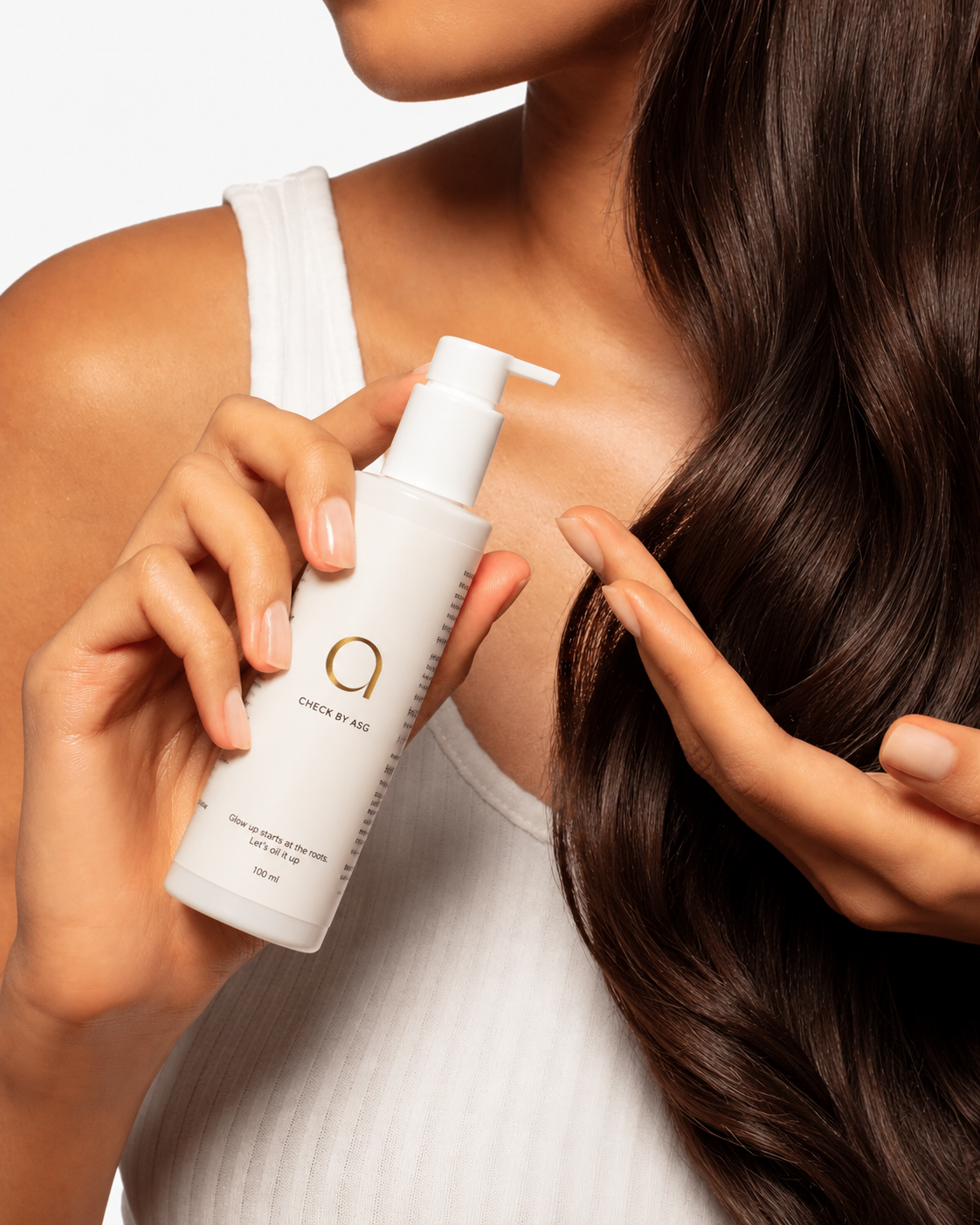
We make a 17-Herb Hair Oil for men and women, and we are not going to tell you it is for a six-year-old. Below is what we actually recommend by age, how to make the weekly ritual pleasant rather than a fight, and the few situations where a doctor comes before an oil bottle.
By age: what to use and how often
There is no single rule for “kids”, because a toddler and a fifteen-year-old have almost nothing in common on the scalp. Here is the honest version.
| Age | What to use | How often | Notes |
|---|---|---|---|
| Babies and toddlers | Whatever your paediatrician suggests. Usually a plain, mild oil in tiny amounts, or nothing. | As advised, usually a light massage a few times a week | Cradle cap, eczema and sensitive skin are common. Ask before applying anything. Herbal blends are not for this age. |
| Roughly 3 to 10 | A plain single oil: coconut or sesame, unscented. | Once a week | Thirty to sixty minutes, then wash. Never overnight. The goal is a soft, untangled head and a nice habit, not treatment. |
| Roughly 11 to 14 | Plain oil still works for most. A mild herbal oil if dandruff or an oily scalp has started, after a patch test. | Once a week, twice if the scalp is dry | Puberty begins. Watch for greasy flakes and itch, which are the first signs the scalp is changing. |
| Roughly 15 to 19 | A herbal scalp oil is reasonable. Ours is suited to this age if the patch test is clear. | Once or twice a week | Exam stress hair fall, dandruff, oily scalp and traction from tight styles are all common. Half the adult dose. |
The ages are rough, and the table is only a guide. When in doubt, go plainer and less often.
The weekly ritual, done so a child does not dread it
Most Indians over thirty have a memory of being held between a parent’s knees on a Sunday with a steel katori of warm oil and no say in the matter. The ritual is worth keeping, but it works better when the child is not fighting it.
- Pick a fixed evening. Sunday after an early dinner is the traditional one. Children do well with routine, and a fixed day means no negotiation.
- Warm the oil in your palms, not on the stove. A teaspoon or two for a young child, a few pumps for a teenager. Rub between palms until it is body-warm. Hot oil on a child’s scalp is a burn risk and a bad memory.
- Fingertips, slow circles, three minutes. No nails, no vigorous rubbing. Move the scalp gently over the bone. Talk, or put something on a screen. The massage is the point, not the oil.
- Comb through with a wide-tooth comb, starting from the ends. Oil makes detangling painless, which is often the biggest win for parents of long-haired children.
- Leave thirty to sixty minutes, then wash. A mild shampoo, lukewarm water, one or two gentle rounds. Never leave oil on a child’s scalp overnight, and never send them to school with oil in.
- Dry gently and loosen the plait. Pat with a towel. For school the next day, a loose plait or a soft tie rather than a tight one.
A child who learns that Sunday evening is scalp time grows into a teenager who does it without being told.
The 60-day rule. One 100ml bottle lasts about four weeks. Most people see the difference at week eight. That is why we sell it as a pair: 2 × 100ml for ₹1,999. Two bottles is one full cycle.
Teenage scalps: what changes and what helps
Around puberty, the oil glands on the scalp become more active. This is why a child who never had a greasy hair day suddenly has one by Wednesday. The extra oil feeds the yeast behind dandruff, and greasy flakes and itch often follow. Add exam stress, late nights, canteen food and tight school hairstyles, and the first serious hair fall of a person’s life often arrives at fifteen or sixteen.
The response is not more oil. It is better oil, used briefly and washed out properly. Once or twice a week, half of an adult dose, thirty to forty-five minutes, and a mild shampoo. If the scalp is oily, keep sessions short. If it is dry and flaky, an hour is fine. Our post on how often to oil hair by scalp type applies to teenagers just as it does to adults.
Two things parents can do that matter more than any oil. First, loosen the school plait. Years of a tight, high plait or ponytail thin the hairline at the temples, and it is one of the few kinds of hair fall that is entirely preventable. Second, keep an eye on the plate. Teenage girls in particular often run low on iron, and that shows up in hair before it shows up anywhere else. If hair fall is heavy or sudden, a paediatrician and a blood test come before any routine change.
Patch test, every time, even for natural oils
Natural is not the same as harmless. Children react to plant ingredients more readily than adults, and a teenager’s scalp that is already irritated from dandruff reacts more readily still. Before any new oil, including a plain one, dab a little behind the ear or on the inner forearm and leave it for a day. Redness, itch or small bumps mean that oil is not for this child. Our full method is in our post on how to patch-test a new hair oil.
Skip oiling entirely, and see a doctor instead, if a child has eczema or psoriasis on the scalp, open sores, an active fungal infection, lice, or sudden patchy hair loss. Oil on lice does not remove them, though it does make the nit comb glide, and oil on a fungal patch feeds it. Those are doctor problems first.
The herbs in our oil, and which ones suit a teenager
For a teenager with a changing scalp, a few of our seventeen herbs are the reason a herbal oil beats a plain one. Neem is traditionally used for dandruff and itch, which is the commonest teenage scalp complaint. Karanja clears buildup and helps protect the scalp from irritation. Nimbu, lemon, balances a scalp that has started over-producing oil. Reetha, the soapnut, is a gentle cleanser within the oil and part of why it rinses out without residue, which matters for a sixteen-year-old who will not wash twice.
Jatamansi is the Himalayan root traditionally used to calm a stressed scalp, and board exams are as stressful as anything an adult faces. Aloe Vera hydrates. Shikakai and Henna condition and soften, and Brahmi supports the follicle against breakage from rough combing and tight plaits. Amla and Bhringraj do the slower root work. We list all 17 herbs and their percentages so a parent can check every ingredient before a patch test.
For younger children, we mean what we said at the top. A plain oil is the better choice. Fewer ingredients means fewer things to react to, and a child under ten does not need Onion or Kalonji. The old way, a single oil warmed in a katori, is right for that age, and we wrote about where it came from in our post on our grandmother’s oiling ritual, explained by science.
Why this ritual is worth passing on
Apoorva’s father and grandfather oiled her hair every week in a small town, long before she lived in the UK or started mixing herbs in a Delhi kitchen. That is the story behind Check by ASG, and it is why a post about children’s hair oil ends up being about habit more than product.
A child who is taught to check on their own scalp once a week, to notice itch and flakes and tangles before they become problems, has learnt something more useful than any single oil. That is the motto on our bottle, and it was a family rule before it was a tagline.
Frequently asked questions
Is hair oil safe for kids?
A plain, unscented oil like coconut or sesame, used once a week and washed out within the hour, is safe for most children over about three. Patch-test first, avoid herbal blends for young children, and ask a paediatrician for babies and toddlers or any child with a skin condition.
Can I use Check by ASG oil on my child?
We recommend it for teenagers, roughly fifteen and up, after a clear patch test and at half the adult dose. For younger children we honestly suggest a plain single oil. Fewer ingredients means fewer things for a young scalp to react to.
How often should I oil my child’s hair?
Once a week is enough for most children. Thirty to sixty minutes before a wash, never overnight, never to school. Teenagers with a dry scalp can go twice a week; those with an oily scalp should keep it to once.
Does hair oil prevent lice?
No. Oil does not stop lice, though it makes a nit comb glide through hair more easily during treatment. Lice need proper treatment advised by a doctor or chemist, not a weekly oiling.
My teenager has hair fall and dandruff. What should I do?
Start with a short, once-or-twice-weekly session using a mild herbal oil with Neem and Karanja, washed out properly, and loosen tight hairstyles. If hair fall is heavy or sudden, see a paediatrician and ask about iron and thyroid before changing anything else.
Keep it simple for the young ones, bring in the herbs for the teenagers, and keep the Sunday evening going for both. If your teenager is ready for a proper scalp oil, two bottles of our 17-Herb Hair Oil for ₹1,999 at half dose will last them well past the first term.
All 17 herbs, in one bottle
Bhringraj, amla, brahmi and 14 more cold-infused herbs — our 17-Herb Ayurvedic Hair Oil is made for hair fall, thinning and slow growth.