
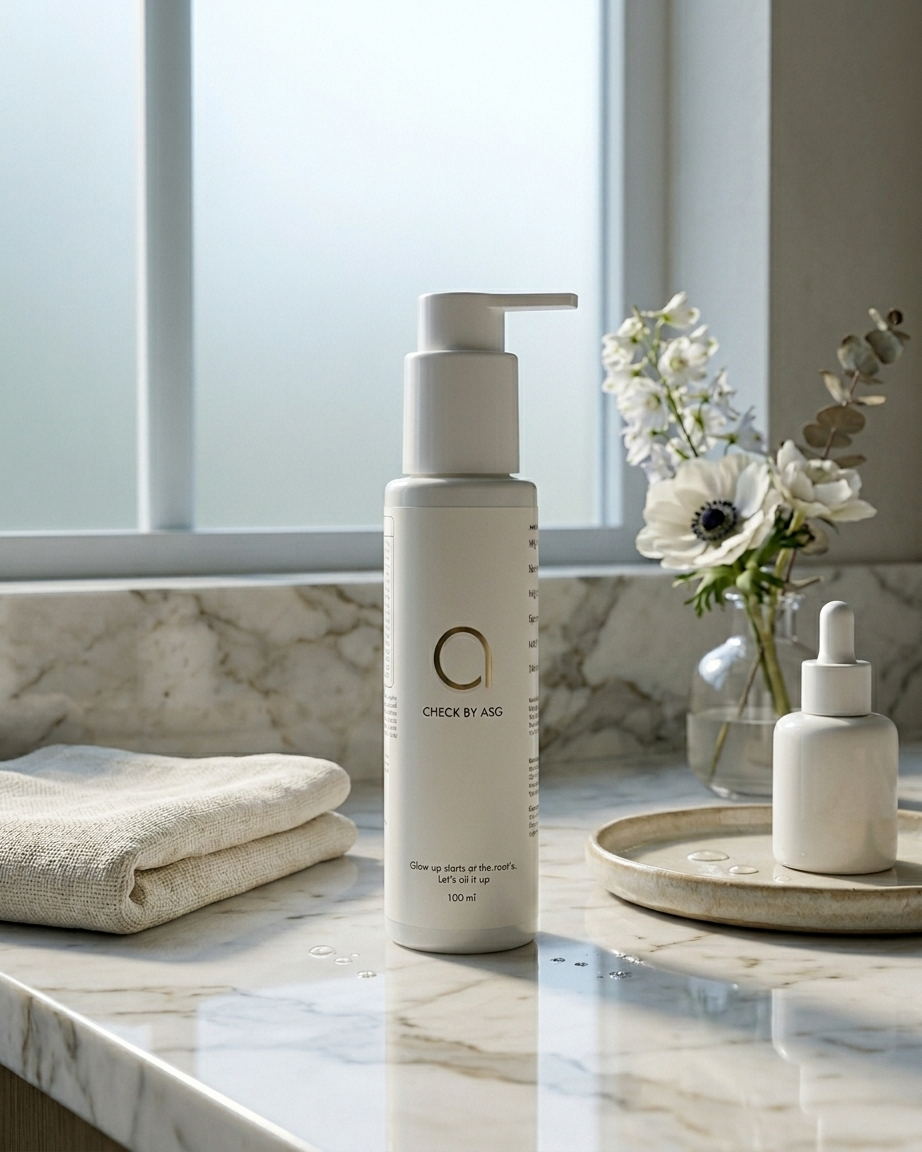
Kalonji oil for hair carries one of the biggest reputations in the Indian kitchen cupboard. In Unani and Ayurvedic tradition, black seed has been used for regrowth at the temples, for thinning, and for greys, for a very long time. The question people actually want answered is whether any of that holds up. The honest answer is: partly. The tradition is strong, the laboratory evidence is interesting, and the human evidence is thin. It is a herb worth having in a blend. It is not a herb to build a legend around, though people have.
We use kalonji in our 17-Herb Hair Oil for its antioxidants and for that regrowth tradition, and we would rather explain exactly where the evidence stops than let the reputation do the selling.
This is one of seventeen ingredients in our blend. For how they work together, see our complete guide to all 17 herbs in our hair oil.
What kalonji actually is
Kalonji is the seed of Nigella sativa, a small flowering plant grown across north India, West Asia and the Mediterranean. The seeds are tiny, matte black and sharp-tasting; you have eaten them on naan and in achaar. They are often called onion seeds in English, which is wrong, because they have nothing to do with onion. In Arabic tradition the plant is habbatus sauda, the “blessed seed”, and in Unani medicine it has been prescribed for more or less everything for centuries.
The oil pressed from the seeds is dark, thick and pungent. Its best-studied compound is thymoquinone, which has antioxidant and anti-inflammatory activity in laboratory settings. That is the chemistry behind most of the claims, and it is genuinely interesting chemistry. The leap from a dish in a lab to a scalp in Lucknow is where things get less certain.
The tradition
In Unani practice, black seed oil was rubbed into the scalp for thinning and bald patches, sometimes alone, often mixed with olive or sesame oil, and sometimes with henna. Ayurvedic texts know the seed too, though it plays a smaller role there than bhringraj or amla. In many Muslim households in north India it is still the first thing a grandmother reaches for when a young man’s hairline starts to move back.
The traditional reasoning was that kalonji “warms” and “strengthens” the scalp, which in modern terms we would probably describe as supporting circulation and calming inflammation. Those are not unreasonable things to want from a scalp oil. Whether kalonji delivers them better than other herbs is a separate question.
The evidence, honestly
Here is what exists, as far as we are aware.
| Claim | What the evidence looks like | Our reading |
|---|---|---|
| Antioxidant and anti-inflammatory on the scalp | Consistent in laboratory and animal work on thymoquinone | Plausible and probably real at the skin level |
| Reduces shedding in telogen effluvium | One small Italian study from around 2013 tested a lotion containing black seed oil on a handful of people with telogen effluvium and reported improved density after three months | Encouraging but tiny, and the lotion had other ingredients |
| Regrows hair in pattern baldness | No good human trials that we know of | Tradition only; research is limited |
| Reverses grey hair | Nothing beyond anecdote | Not supported |
| Helps dandruff and itch | Some laboratory work on microbes, plus long traditional use | Reasonable as part of a blend |
So: kalonji is a sensible ingredient for scalp health, with a long record of safe topical use and a plausible mechanism. It may support regrowth where the follicle is still alive, as in stress or post-illness shedding. It has not been shown to bring back hair in hereditary pattern baldness, and anyone claiming that for kalonji alone is ahead of the science.
If your concern is specifically the temples and crown, our post on thinning at the temples and crown goes into what oil can and cannot do there, and when a dermatologist should be involved.
The 60-day rule. One 100ml bottle lasts about four weeks. Most people see the difference at week eight, which is also roughly how long the one decent kalonji study ran before it measured anything. That is why we sell it as a pair: 2 × 100ml for ₹1,999. Two bottles is one full cycle.
Why kalonji is in our blend, and what it sits beside
We did not build a kalonji oil. We built a 17-herb oil in which kalonji does one job, antioxidant support for the scalp, alongside herbs that do the others. We think that is the right way to use a seed with a big reputation and modest evidence: let it contribute, do not ask it to carry the formula. We list all 17 herbs and their percentages on our ingredients page.
- Bhringraj (5%) is the growth and density herb with the stronger Ayurvedic record. If kalonji is the support, bhringraj is the lead. See our post on bhringraj for hair.
- Onion brings sulphur, which supports the keratin hair is built from. Kalonji is often confused with onion seed; in our blend both are present and they do different things. Our post on what onion’s sulphur does for thinning hair explains.
- Amla (5%) adds vitamin C at the root, another antioxidant, from a different direction.
- Manjistha is traditionally used for scalp circulation, which is what the old Unani “warming” idea was probably describing.
- Neem and karanja keep the scalp clear and calm so the rest has somewhere to work.
The blend is cold-infused without heat, which we think matters for kalonji in particular, because thymoquinone is not especially stable when heated.
How to use kalonji oil
Pure kalonji oil
You can buy it cold-pressed and use it neat, but most people find it too thick and too pungent for regular use. It also stains fabric. If you go this route, dilute it one part to three with a lighter oil such as olive or coconut, patch-test behind the ear for 24 hours, and apply to the scalp two or three times a week, leaving it an hour before washing. Keep it off the pillow.
In a blend
This is the practical route. Warm two or three pumps between your palms, massage into the scalp in slow circles for two to three minutes, and leave for 30 minutes or overnight. Wash with a mild shampoo. Two or three times a week, for at least eight weeks, before you judge anything. A pump bottle makes this easy to keep up, which is most of the battle.
On a Sunday evening, this takes less time than making chai. The herb does not need you to do anything clever. It needs you to turn up.
Who should be careful
Topical kalonji is well tolerated by most people. A few things to know:
- Skin reactions happen. Patch-test, as with any plant oil.
- If you are pregnant or breastfeeding, the caution in the literature is about taking black seed by mouth in medicinal doses, not about a scalp oil. Still, ask your doctor if you are unsure.
- If hair is falling in round patches, or the hairline is receding steadily in a man under 30, see a dermatologist first. Kalonji can sit alongside what they prescribe; it should not replace it.
- If shedding comes with tiredness, weight change or irregular periods, get a blood test. No seed fixes low iron or a thyroid problem.
Apoorva, who started Check by ASG in a Delhi kitchen, built the blend around a rule her father and grandfather taught her without saying it: use what has earned its place, and do not oversell any of it. Kalonji earned its place. It is not the whole story. You can read hers on our founder’s page.
Frequently asked questions
Does kalonji oil regrow hair?
It is traditionally used for regrowth and has a plausible antioxidant, anti-inflammatory mechanism, but human research is limited to one very small study on telogen effluvium. It may support regrowth where follicles are resting rather than gone. It has not been shown to reverse hereditary pattern baldness.
Can I apply kalonji oil directly on my scalp?
Yes, but it is thick and pungent and stains fabric, so most people dilute it one to three with a lighter oil or use it as part of a blend. Patch-test first and keep it off the pillow.
Is kalonji the same as onion seed?
No. Kalonji is Nigella sativa and has nothing to do with onion. The confusion comes from the English name “onion seed”. Onion and kalonji do different things for hair; both are in our blend.
How long does kalonji take to show results?
Give it eight weeks of use two or three times a week. The small study that exists measured at three months. Scalp comfort tends to improve sooner; any change in density takes the full cycle or longer.
Does kalonji oil reverse grey hair?
There is no evidence for this beyond anecdote. If colour depth is what you want, neeli indigo is the herb with the tradition for it, and even that keeps dark hair deep rather than changing grey back.
Kalonji is a good seed with an outsized legend. The antioxidants are real, the traditional use is long, and the human evidence is one small study and a lot of grandmothers. We use it for what it is: a worthwhile part of a blend, not a promise. If you would like it that way, alongside sixteen other herbs, the two-bottle pack is one full eight-week cycle for ₹1,999.
All 17 herbs, in one bottle
Bhringraj, amla, brahmi and 14 more cold-infused herbs — our 17-Herb Ayurvedic Hair Oil is made for hair fall, thinning and slow growth.