
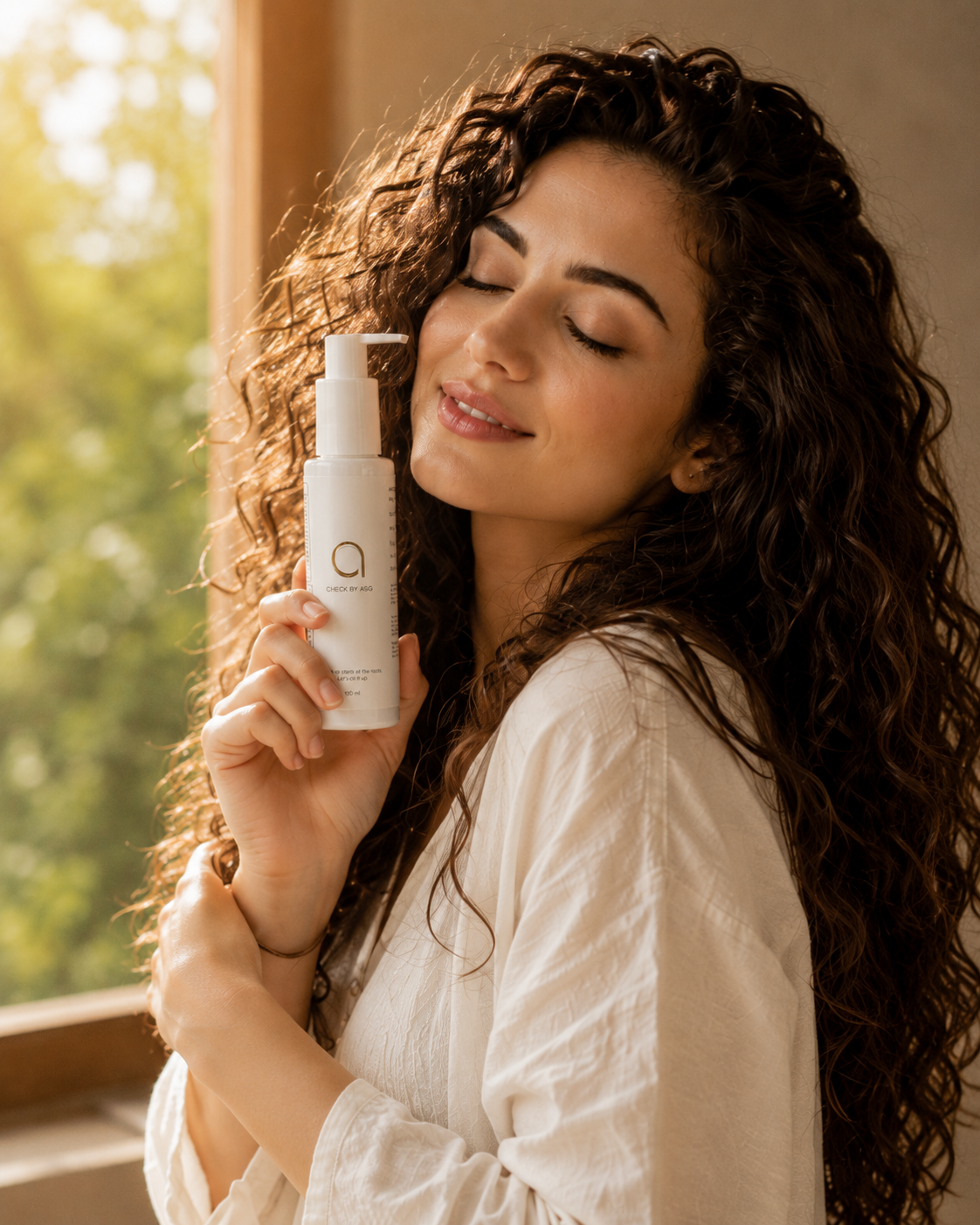
Overnight hair oil suits a dry scalp, thick or curly hair, and a north Indian winter. It is a poor idea for an oily scalp, a dandruff-prone one, the monsoon, and anyone who breaks out along the hairline. The honest reason to oil overnight is convenience and deeper conditioning of the length, not a stronger dose for the scalp, which takes most of what it will in the first hour or two.
Many of us were raised on overnight oiling, with a Saturday night application and a Sunday morning wash. It is a good ritual for the right scalp. This post sets out what it actually does, where the benefits are, where the risks are, who should skip it, and how to do it so that you get the first without the second.
What overnight oiling does, and what it does not
The scalp is skin, and skin does not absorb more just because something sits on it for longer. Most of what a hair oil gives the scalp, it gives in the first hour or two: the herbs in contact with the skin, the conditioning of the surface, and above all the massage, which brings blood to the follicles. Eight hours of oil on the scalp is not eight times the benefit of one.
The hair shaft is different. It is porous, and dry, thick or curly lengths do take up oil more fully over a longer soak. Hair that is rough from sun, hard water or heat is noticeably softer after an overnight oil than after a quick one. That is the real and specific benefit of overnight, and it is a benefit to the length rather than the root.
Beyond about twelve hours there is nothing more to gain, and the oil starts to collect dust, sweat and dead skin against the scalp. Overnight is the upper limit, not a target to exceed.
The benefits of overnight hair oil
Deeper conditioning for dry lengths
If your hair is below the shoulder, coarse, curly or chemically treated, the extra hours do real work on the strand. Castor and olive seal the cuticle, henna and shikakai soften it, and by morning the hair combs through without the mid-length snag that dry hair gives. People with short or fine hair get almost none of this benefit and should not bother with overnight for it.
Convenience
Oiling at 9pm and washing at 8am fits a working week far better than finding a free hour in the evening and then washing before bed. For a lot of people, overnight is simply the only way the habit survives. A habit that survives beats a perfect routine that lapses by week three.
The ritual
Three minutes of slow circles on the scalp, a warm katori, the smell of jatamansi and bhringraj, and then sleep. People tell us this is the part of the week they look forward to, and a calmer evening is itself good for a stressed scalp.
The risks of overnight hair oil
Buildup on an oily scalp
A scalp that already produces plenty of sebum does not need eight hours under oil. The follicle openings clog, the roots go flat and the parting shines by noon the next day even after a wash. Over weeks this means more itch and more shedding, not less. If your hair looks limp on day two after a wash, your scalp is oily and overnight is not for you.
Dandruff gets worse
The yeast associated with dandruff feeds on scalp oils. Oil left on a flaking scalp all night is a long meal for it. People with dandruff or seborrhoeic dermatitis usually do better with a 30 to 60 minute session and a thorough wash, using herbs traditionally used for flaking, such as neem and karanja, rather than longer contact.
Pillow acne
Oil moves from the hairline to the pillowcase and then to the forehead, temples and jaw. If you are prone to breakouts, this is the most common complaint we hear. Keeping oil off the front hairline, plaiting the hair back and covering the pillow with an old cotton towel solves most of it.
Tangles and breakage
Long oiled hair left loose on a pillow knots overnight, and detangling knotted oiled hair in the morning snaps strands. A loose plait before bed prevents it. Never a tight bun; oiled follicles are soft and a tight style pulls at the hairline.
The monsoon problem
In Mumbai, Kolkata, Chennai or Kochi between June and September, the scalp is already damp with humidity and prone to fungal flaking. Overnight oil adds to that. Shorter sessions and a proper dry-off at the roots are the monsoon rule.
The 60-day rule. Whether you oil for an hour or overnight, the follicle responds on its own timetable. One 100ml bottle lasts about four weeks. Most people see the difference at week eight. That is why we sell it as a pair: 2 × 100ml for ₹999, buy one get one free. Two bottles is one full cycle.
Who should skip overnight oiling
- Anyone with an oily scalp, which means hair that looks limp by the second day after a wash.
- Anyone with dandruff, seborrhoeic dermatitis, or a scalp that flakes in the monsoon.
- Anyone who breaks out along the hairline or jaw.
- Anyone with fine or short hair, because the length benefit does not apply and the scalp cost does.
- Anyone who knows they will not wash it out in the morning. Oil carried into a second day is worse than no oil.
None of these people should skip oiling. They should skip the overnight version and use a 30 to 90 minute session before a wash instead, which gives the scalp everything it was going to get anyway. Our guide to how often to oil by scalp type and hair type sets out the frequency that suits each.
How to do overnight oiling right
- Oil dry, detangled hair in the evening, at least an hour before bed, so the oil has settled and is not dripping.
- Use less than you think. Two or three pumps for most hair lengths. Overnight does not need more oil, only more time.
- Apply to the scalp first, in sections, with fingertips, and massage for two to three minutes. The full method is in our three-minute scalp method.
- Run what is left down the length and ends. Keep it off the front hairline if you break out.
- Plait loosely, or twist and clip softly. No tight buns.
- Cover the pillow with an old cotton towel or wear a soft cotton cap. Change the towel every time.
- In the morning, apply a mild shampoo to the scalp before wetting it, work it through the oil, then add water. One wash is usually enough; a second if the hair still feels coated. Lukewarm water, then dry the roots properly.
- Do this one or two nights a week, not every night. The scalp needs oil-free stretches.
Why the oil itself matters for overnight
Heavy mineral-oil blends and silicone-laden oils sit on the scalp as a film, which is tolerable for an hour and a problem for eight. They are also the oils that take three shampoos to remove, and three shampoos undo the conditioning you oiled for. A lighter, cold-infused herbal oil with no mineral oil or silicones is kinder to the scalp over a long leave-on and washes out in one go.
For the length, the herbs that earn the overnight hours are castor and olive, which seal the ends, henna and shikakai, which soften and add gloss, and aloe vera for hydration. For the scalp, bhringraj and amla do the root work at 5% each, and jatamansi and neeli indigo cool a scalp that runs hot under a pillow. Neem and karanja help keep the scalp clear, which matters more for a long leave-on than a short one. We list all 17 herbs and their percentages on our ingredients page.
Overnight was how Apoorva’s grandfather did it: a Saturday night in a small town, a steel katori warmed on the stove, and a Sunday morning wash. It is the version of the ritual that started the brand. That story is here. And if you have tried overnight oiling before and decided it did nothing, our post on why hair oil seems not to work covers the timing mistake behind most of those verdicts.
Frequently asked questions
Is overnight oiling better than leaving oil for one hour?
For the scalp, not by much. Most of what the scalp takes in, it takes in the first hour or two, and the massage matters more than the hours. For dry, thick or curly lengths, the longer soak does condition more deeply. Overnight is mainly a convenience and a comfort, not a stronger dose.
Can overnight oiling cause hair fall?
Not directly. What it can do on an oily or dandruff-prone scalp is encourage buildup and flaking, which make shedding worse over time. Sleeping with long oiled hair loose can also cause tangles and breakage. If your scalp suits it and you plait the hair, the risk is small.
Does sleeping with oil in my hair cause acne?
It can, along the forehead, temples and jaw, because oil transfers to the pillow and then to the skin. Keep oil off the hairline, plait the hair back, cover the pillow with an old cotton towel, and change it each time. If you break out easily, a one-hour session before a wash is the safer habit.
Can I oil overnight every night?
We would not. The scalp needs oil-free stretches, and nightly oiling means daily washing, which strips it. One or two nights a week is the comfortable maximum, and two or three sessions a week in total, overnight or shorter, is the routine that shows results.
Will I catch a cold from oiling overnight?
There is no evidence that oil on the scalp causes colds. The old warning probably comes from washing it out early on a winter morning and going out with wet hair. Wash in warm water, dry the roots properly, and the concern disappears.
Overnight oiling is a good habit for the right scalp and a counterproductive one for the wrong scalp. Know which you have, keep it to a night or two a week, plait, cover the pillow, and wash properly in the morning. If you want an oil light enough to sleep in and honest enough to wash out in one go, the two-bottle pair at ₹999 is one full eight-week cycle.