
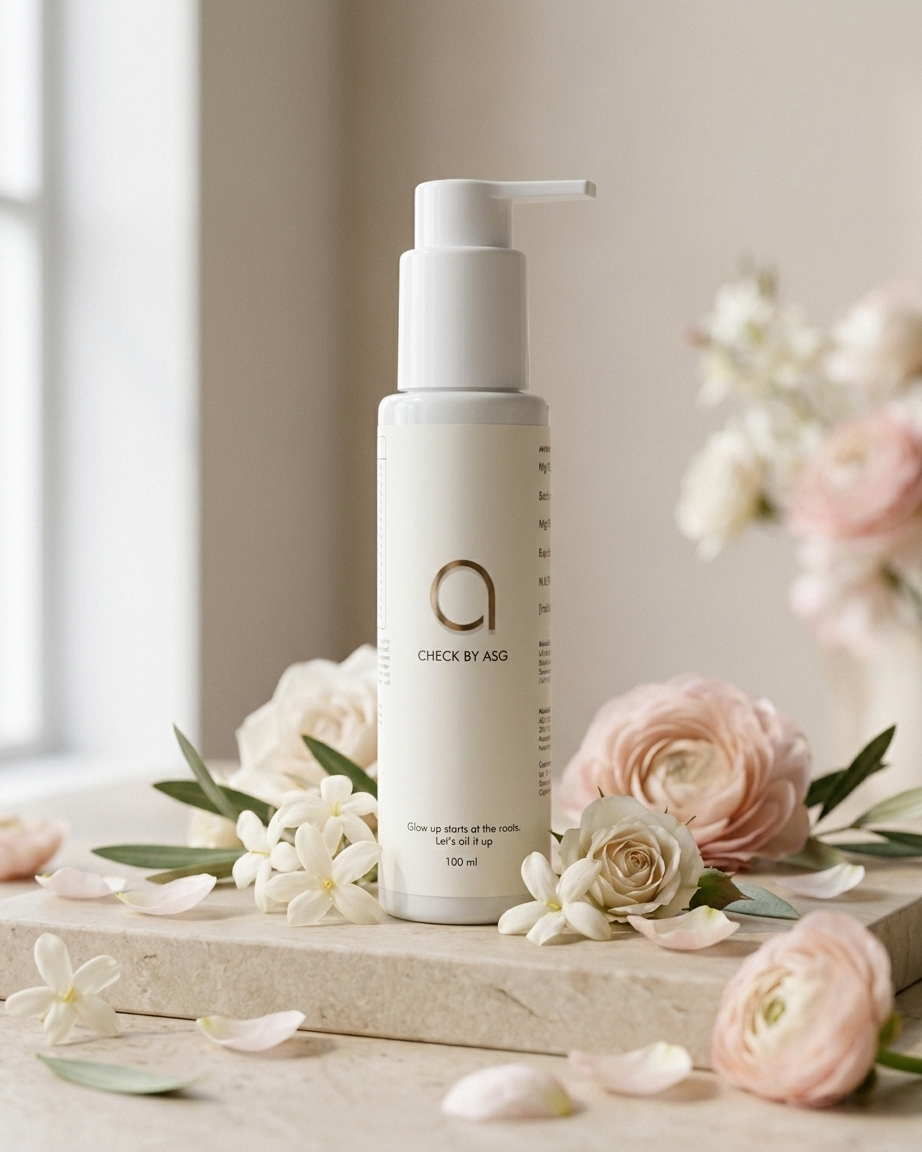
Neem for hair is really neem for the scalp. It does very little for the length of the strand. What it is traditionally used for is the skin underneath: the flaking, the itch that starts at the back of the head by evening, and the waxy buildup that makes roots feel coated two days after a wash. If any of those three is your problem, neem is one of the most sensible herbs to look for in a hair oil.
It is also one of the most misunderstood. People expect it to make hair grow. It does not do that directly. What it does is make the scalp a cleaner, calmer place, and hair that grows from a calm scalp tends to break less and shed less. That is the honest version.
Below we explain what neem does, which scalp problem it suits, how we use it in our blend, and when neem is not enough and a dermatologist is.
What neem actually does on the scalp
Neem (Azadirachta indica) is the bitter leaf our grandmothers boiled in bath water during summer. In Ayurveda it is classed as cooling and purifying, and it has been used on skin for centuries, for everything from heat rashes to scalp flakes.
Modern lab work has looked at neem compounds such as nimbidin and azadirachtin for their effect on microbes and inflammation. Most of that research is on extracts in a dish, not on people’s scalps, so we would call the evidence promising but limited. What we can say is that neem has a long record of safe topical use, and that many people notice less itch and less visible flaking within a few weeks of using a neem-containing oil regularly.
The mechanism, as far as it is understood, is simple. Dandruff is usually linked to an overgrowth of a yeast that lives on everyone’s scalp, feeding on sebum. Neem is traditionally used to keep that environment less friendly to the yeast and to calm the irritation it causes. It is not a drug and it does not replace one. It is a leaf that helps.
Dandruff, itch, and buildup are three different problems
Most people lump these together. They have different causes and respond to different things, so it is worth spending a minute telling them apart before you buy anything.
| What you see | Likely cause | Does neem help? |
|---|---|---|
| Oily, yellowish flakes that stick to the scalp; itch worse in humid months | Classic dandruff (yeast plus excess sebum) | Yes, this is where neem is traditionally strongest |
| Fine, dry, white powder on shoulders; scalp feels tight after washing | Dry scalp, often from hard water or harsh shampoo | Partly; aloe, olive and shikakai matter more here |
| Roots feel waxy or coated; hair goes flat by day two | Product and sebum buildup | Indirectly; karanja and reetha do the clearing, neem keeps the scalp calm |
| Thick silvery scales, redness, patches beyond the hairline | Possibly psoriasis or seborrheic dermatitis | Not on its own. See a dermatologist |
If you are still unsure which one you have, we wrote a longer comparison in our post on telling dandruff apart from a dry scalp and choosing the right oil routine.
Why neem on its own is hard to live with
Pure neem oil is strong. It smells like garlic and sulphur left in the sun, it is thick, and used alone it can be drying on an already dry scalp. This is why most traditional preparations never used neem by itself. It was boiled into a base oil with other herbs, or the leaves were used in a rinse while the oil did the moisturising.
In our 17-Herb Hair Oil, neem is cold-infused rather than heat-extracted. We steep the herbs without applying heat, which takes longer but keeps the more delicate compounds intact and keeps the smell closer to green and leafy than to pungent. The neem sits alongside herbs that do the jobs neem cannot: karanja for clearing residue and protecting against irritation, reetha for a gentle clean, nimbu to balance excess oil, and aloe vera for hydration so the scalp is not left tight.
The 60-day rule. One 100ml bottle lasts about four weeks. Most people see the difference at week eight, and with dandruff the itch usually settles well before the flakes do. That is why we sell it as a pair: 2 × 100ml for ₹999, buy one get one free. Two bottles is one full cycle.
The herbs that work alongside neem
A scalp that flakes needs more than one thing done to it. Here is how the supporting cast fits around neem in our blend. We list all 17 herbs and their percentages on our ingredients page.
- Karanja clears buildup and is traditionally used to protect the scalp from irritation. It is the quiet partner neem is usually paired with in old formulations. We cover it in detail in our post on karanja oil for scalp protection.
- Reetha (soapnut) is a gentle natural cleanser. It helps the oil lift what is sitting on the scalp without leaving a film behind.
- Nimbu (lemon) helps balance excess oil, which matters because dandruff yeast feeds on sebum.
- Aloe vera (2%) hydrates. Without it, a purifying oil can leave the scalp feeling stripped.
- Jatamansi (5%) calms a stressed scalp. Itch and stress feed each other, and this Himalayan root is traditionally used for exactly that loop.
A four-week neem routine for a flaky, itchy scalp
This is the routine we suggest to anyone who writes to us about dandruff. It is not complicated, but it only works if you actually do it.
- Patch-test first. A few drops behind the ear, wait 24 hours. Natural does not mean non-reactive.
- Oil two to three times a week. Warm a few pumps between your palms. Part the hair and apply to the scalp, not the lengths. Massage in slow circles for two to three minutes. You are not scrubbing, you are moving the skin.
- Leave it 30 minutes to an hour. Overnight is fine if your scalp is dry, but if it is oily and flaky, a shorter window works better and does not feed the yeast.
- Wash with a mild shampoo, twice if needed. The first wash loosens the oil, the second removes it. Leaving oil on a dandruff-prone scalp for days makes things worse, not better.
- Change the pillowcase more often. Small thing. It helps.
Give it four weeks before you judge. Itch tends to settle first, usually in the second week. Flakes take longer because the skin cycle itself takes about a month to turn over. If you are after a week-by-week plan built specifically around flakes, we have one in our four-week neem and karanja routine for dandruff.
When neem is not enough
We would rather lose a sale than have you oil a scalp that needs a doctor. See a dermatologist if you have any of these:
- Thick, silvery or crusted scales, especially if they extend past the hairline or appear on elbows and knees
- Red, weeping or painful patches
- Flaking that has not changed at all after six weeks of a consistent routine
- Hair fall in distinct round patches rather than general thinning
Seborrheic dermatitis and scalp psoriasis are common in India and they respond to medicated treatment. Oiling can sit alongside that treatment as support, and neem is a gentle companion, but it is not the main event in those cases. Ask your dermatologist before combining.
Apoorva started this brand after years of watching her father and grandfather oil her hair on Sunday evenings, and her rule has always been simple: if she would not use it, she would not ask you to. That includes not overpromising what a leaf can do. You can read more of that story on our founder’s page.
Frequently asked questions
Can I apply neem oil directly to my scalp?
You can, but pure neem oil is harsh, strong-smelling and can be drying. Most people do better with neem blended into a base of lighter oils and balancing herbs. If you do use it neat, dilute it and patch-test first.
Does neem help with hair fall?
Indirectly. Neem does not act on the follicle the way bhringraj or onion are traditionally used to. What it does is reduce the itch and flaking that lead to scratching, inflammation and breakage at the root. Less irritation usually means less shedding.
How long does neem take to work on dandruff?
Many people notice less itch within one to two weeks. Visible flakes usually take four to six weeks to reduce, because that is roughly how long one skin cycle takes. Consistency matters more than quantity.
Can I use neem oil if I have a dry scalp rather than dandruff?
Yes, as long as it is in a blend with hydrating ingredients like aloe vera and olive oil. Neem alone on a dry scalp can make the tightness worse. Check that the oil you choose has both purifying and moisturising herbs.
Is neem safe for colour-treated hair?
Neem itself does not strip colour. Our oil has no mineral oil or silicones and is suitable for colour-treated hair. The thing to watch is how often you wash afterwards, since frequent washing fades colour faster than the oil does.
Neem will not grow you a new hairline. What it will do, used two or three times a week for a couple of months, is give you a scalp that does not itch at 6 pm and does not leave a dusting on a dark kurta. For most people that is the first thing that needs fixing anyway. If you want to try it as part of a complete blend, the two-bottle pack covers one full eight-week cycle.